Medina of Tunis (UNESCO)
270 hectares of winding streets, souks, mosques, madrassas and Hafsid–Ottoman palaces. The largest preserved Arab medina in the Maghreb, UNESCO-listed in 1979. 700 listed monuments.
Capital of Tunisia since the 13th century, Tunis and Greater Tunis are home to 2.7 million inhabitants gathered around the salt lake.
Capital of Tunisia since the 13th century, Tunis and Greater Tunis are home to 2.7 million inhabitants gathered around the salt lake. The UNESCO Medina 1979, the largest preserved Arab medina in the Maghreb (270 hectares), sits alongside the European city inherited from the French protectorate. 15 km to the north, the UNESCO-listed archaeological site of Carthage and the picturesque village of Sidi Bou Saïd make Tunis Bay one of the most fascinating urban ensembles in the Mediterranean. The Bardo Museum houses the finest collection of Roman mosaics in the world.
Tunis (Tunes in Latin) existed from the 4th century BC as a suburb of Carthage, the Phoenician capital founded according to tradition by Queen Dido in 814 BC. Carthage became the greatest power in the western Mediterranean until its destruction by Rome in 146 BC (Third Punic War). Refounded by Augustus as a Roman colony, it became a major provincial capital again: the Baths of Antonin, theatre, Phoenician ports and the Basilica of Damous El Karita still bear witness to this. In the 5th century, the Vandals and then the Byzantines successively occupied the region.
The Arab conquest (647–705) marked a turning point: Carthage was abandoned in favour of Kairouan, but Tunis was reborn in the 9th century under the Aghlabites. The great Ez-Zitouna Mosque (732, enlarged in the 9th century) became the spiritual and intellectual heart of Ifriqiya. Under the Hafsids (1229–1574), Tunis became the capital and reached its golden age: madrassas, palaces, souks and hammams multiplied in the medina, which then had 100,000 inhabitants. The city resisted the crusades of Saint Louis (who died at Carthage in 1270) and the Spanish forces of Charles V (1535).
The Ottoman Empire (1574–1881) established a semi-autonomous regency governed by the beys. The Hafsids and then the Husainids (from 1705 onwards) built palaces and residences at the Bardo. The French protectorate (1881–1956) created the 'European city' with its wide Haussmann-style avenues, including Avenue Habib Bourguiba. Independence (20 March 1956) made Tunis the capital of the young Tunisian Republic, the theatre of the Jasmine Revolution in January 2011 which sparked the Arab Spring.
10 Essential Sites Selected by Our Local Team.
270 hectares of winding streets, souks, mosques, madrassas and Hafsid–Ottoman palaces. The largest preserved Arab medina in the Maghreb, UNESCO-listed in 1979. 700 listed monuments.
Tunis's oldest mosque (732) and the second great Islamic university in the Maghreb after Kairouan. 200 reused Roman columns support the prayer hall. Remarkable columned courtyard.
9 UNESCO-listed archaeological sites 1979: Byrsa Hill, Phoenician ports, Baths of Antonin (Africa's largest Roman thermal complex), theatre, Roman villas, tophet, museum. Exceptional views over Tunis Bay.
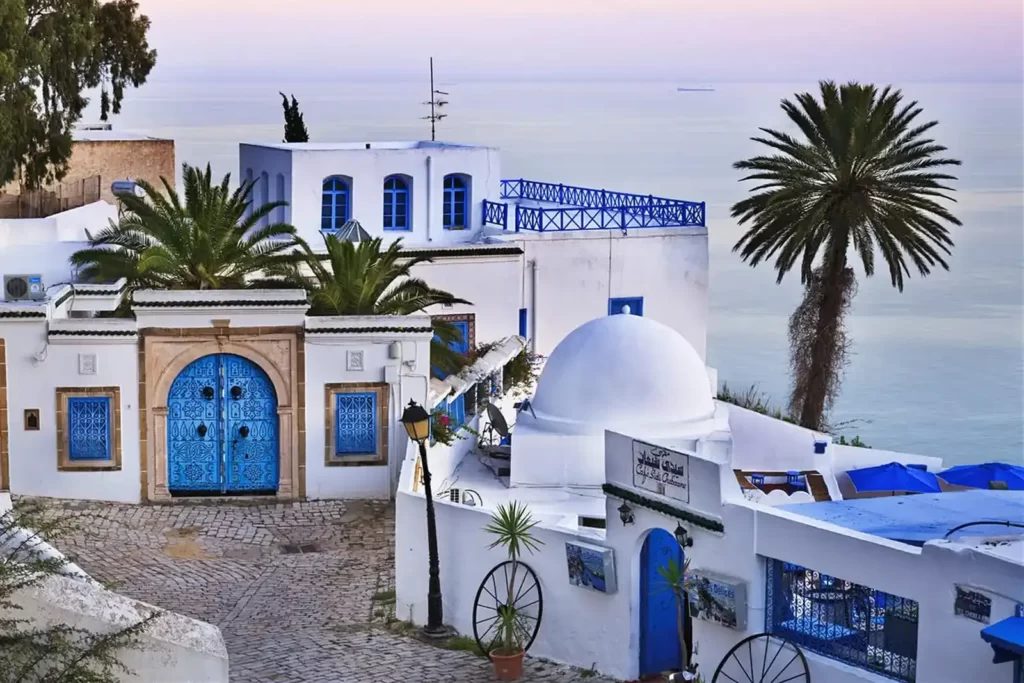
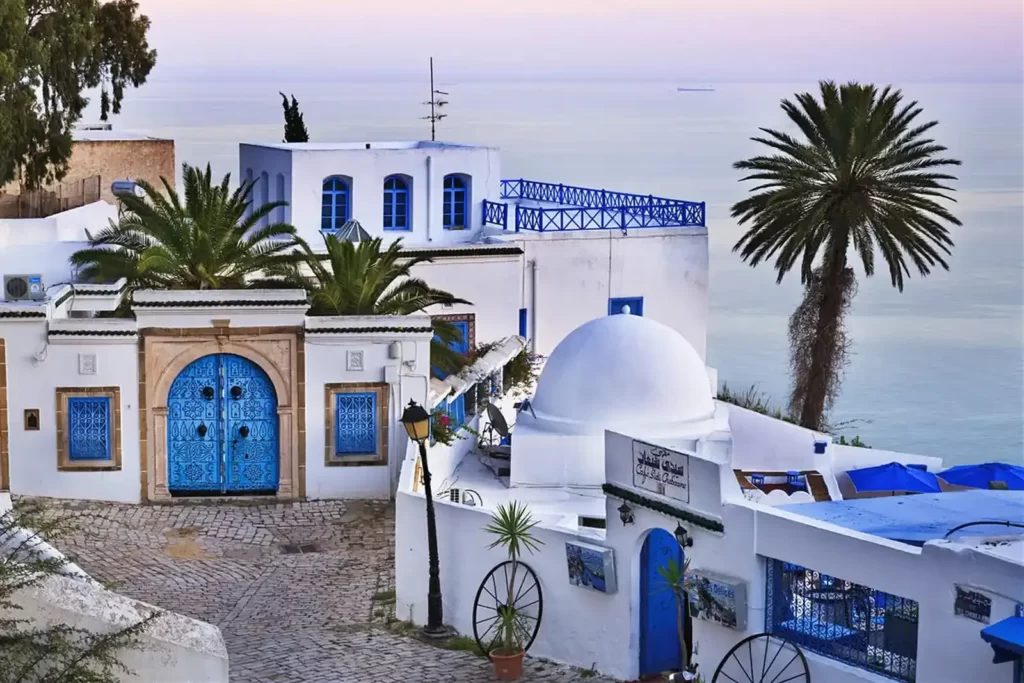
Picturesque white and blue village perched on a cliff above the Mediterranean. Café des Nattes, Dar El Annabi palace, Ennejma Ezzahra palace (museum of Arab-Andalusian music).
The world's finest collection of Roman mosaics in a 19th-century beylic palace. Treasures of Carthage, Greco-Roman statuary, Palaeochristian remains, traditional costumes.
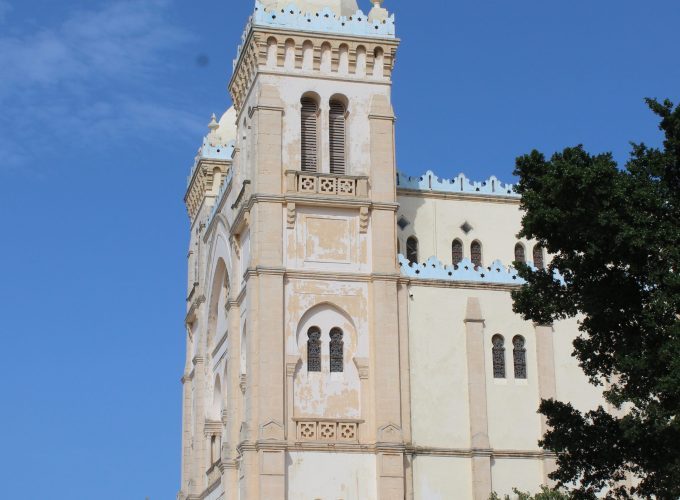
Tunis's Champs-Élysées. Saint-Vincent-de-Paul Cathedral (1897), municipal theatre, French embassy, Belle Époque brasseries. Heart of the 2011 Revolution demonstrations.
Souk El Attarine (perfumes), Souk des Chéchias (red fez hats), Souk El Berka (gold), Souk des Étoffes. Specialised by guild since the 13th century.
19th-century beylic residence in Bardo, restored and opened in 2024. Italo-Moorish architecture, frescoes, Persian cabinets, terraces overlooking gardens.
18th-century Qur'anic school in the heart of the medina. Marble-columned courtyard, sculpted wooden ceilings, student cells. One of the Maghreb's finest.
37 km² lagoon in the city's heart, migratory refuge for flamingos, herons and storks. Walk along the TGM causeway, views of Sidi Bou Saïd in the distance.
A journey through the eras that shaped Tunis.
Founded by Phoenicians from Tyre, capital of a commercial empire dominating the western Mediterranean. Horseshoe-shaped Punic ports, tophet of Salammbô (sanctuary of sacrificed children), Byrsa hill where General Hannibal grew up. Destroyed by Scipio Aemilianus in 146 BC at the end of the Third Punic War.
Refounded by Augustus as a Roman colony, it became the empire's 4th city after Rome, Alexandria and Antioch. Antonine Baths (largest complex in Roman Africa), amphitheatre, theatre with 7,500 seats, Zaghouan aqueduct (132 km), Christian basilicas. Saint Augustine taught rhetoric here.
The Maghreb's second great Islamic university after Kairouan. For 13 centuries it trained jurists, theologians and physicians until becoming Ez-Zitouna University in 1956. Arcaded courtyard of 5,000 m² and prayer hall with 200 reused ancient columns.
Under the Hafsids, Tunis becomes the capital of a powerful emirate. The medina expands, souks specialise, medersas multiply. Bardo beylic palace, Slimania medersa (18th century), Souk El Berka slave market, transformed into a gold market in the 20th century.
Built during the French protectorate facing the medina, in Neo-Byzantine and Neo-Moorish style. Symbol of the meeting of colonial and Arab cultures. Today a co-cathedral of the Archdiocese of Tunis.
The most prestigious festival in the Maghreb. International concerts in the restored ancient Roman theatre (Sting, Patrick Bruel, Marcel Khalifé have performed). Theatre, dance, music.
Malouf, Sufi concerts and Sufi dancing every evening after iftar in the medina's palaces and madrasas.
Illuminated night tours, literary trails, artistic performances in the historic heart's alleyways and monuments.
Domestic flight Djerba–Tunis Carthage: 1 hour, from €80 return (Tunisair Express, several daily flights). Private car: 6 hours 30 minutes via the A1 motorway (550 km). SNTRI night bus: 8 hours for 35 DT. Night train possible but rare. Recommended solution: flight to save time, car to combine stops.
TGM light metro very efficient for connecting Tunis–Carthage–Sidi Bou Saïd–La Marsa (3 DT per ticket). Taxis abundant (meter compulsory, around 0.65 DT/km). Bolt and Yassir available. For Carthage, allow 25 minutes by TGM from Tunis Marine.
Minimum 3 days to cover the essentials: 1 day medina plus Bardo, 1 day Carthage plus Sidi Bou Saïd plus La Marsa, 1 day museums plus souks plus evening. 5 days to add excursions to Hammamet, Bizerte or Dougga.
Yes but just the essentials: Byrsa plus Antonine baths plus Punic ports (3 hours). To visit all 9 sites on the pass, allow a full day. Combine with nearby Sidi Bou Saïd (15 minutes by taxi) for an ideal itinerary.
No, Tunis medina is safe during the day. A few classic scams (fake guides, fake students wanting to practise French) but nothing more. Stay cautious after 10 pm in isolated alleyways and don't display valuable items.
April–June and September–November offer perfect weather: 22–28 °C, little rain, sites not crowded. Avoid July–August (35 °C, crowds at the Carthage Festival) and December–February (possible rain, cool temperatures: 10–15 °C).
The TGM (light metro) is by far the best option: direct from Tunis Marine, 25 minutes, 3 DT. Get off at Carthage Hannibal for Byrsa, Carthage Présidence for Punic ports. Taxi: 15–20 DT, can be stuck in traffic.
Decorative mosaics (Bardo galleries), leather goods (Selliers souk), amber and jasmine perfumes (El Attarine souk), Kairouan carpets (Ed Dar shops), Sidi Bou Saïd pottery, copper metalware, chechias (souk of the same name).
Our local team designs your ideal Tunis itinerary. Private car or group seat, the cheapest on the market.