Prehistory and protohistory
200,000 — 1100 BC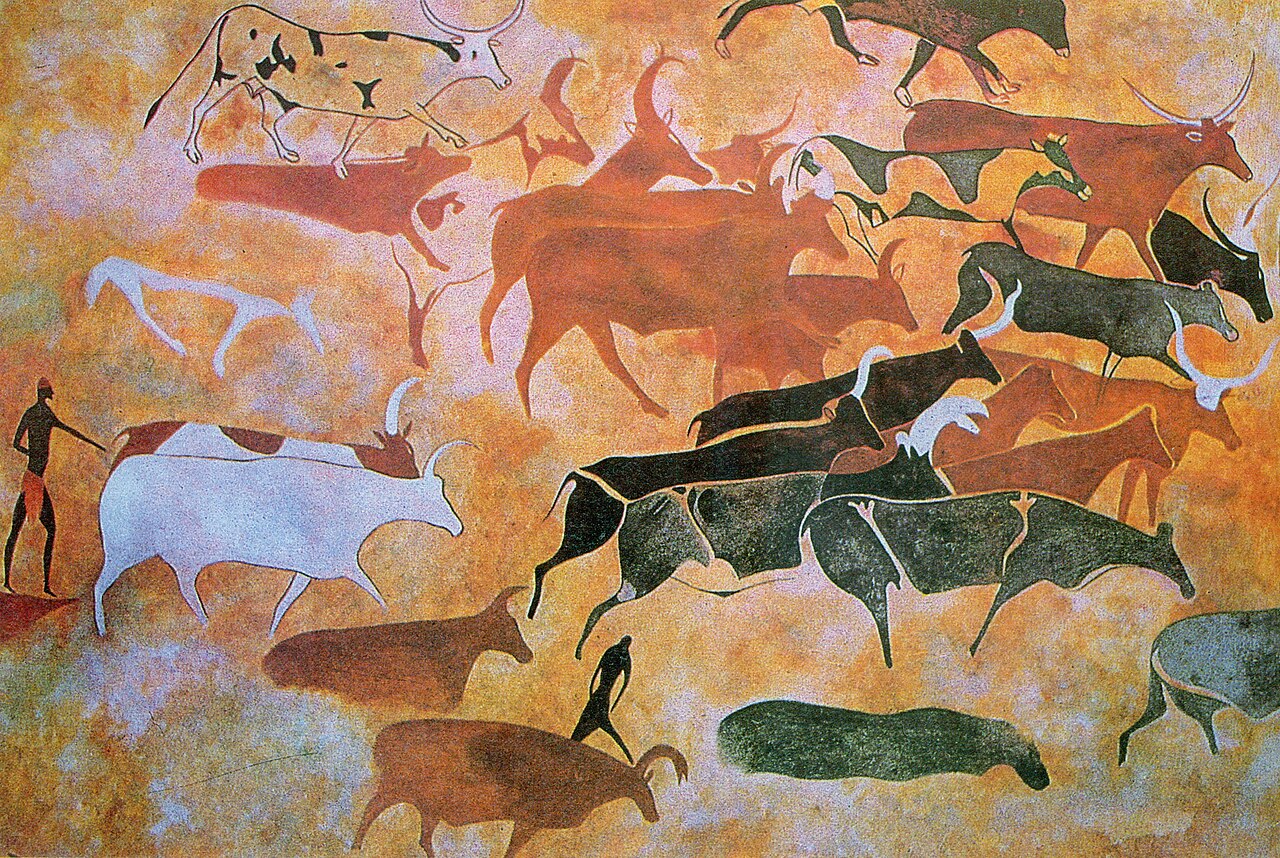
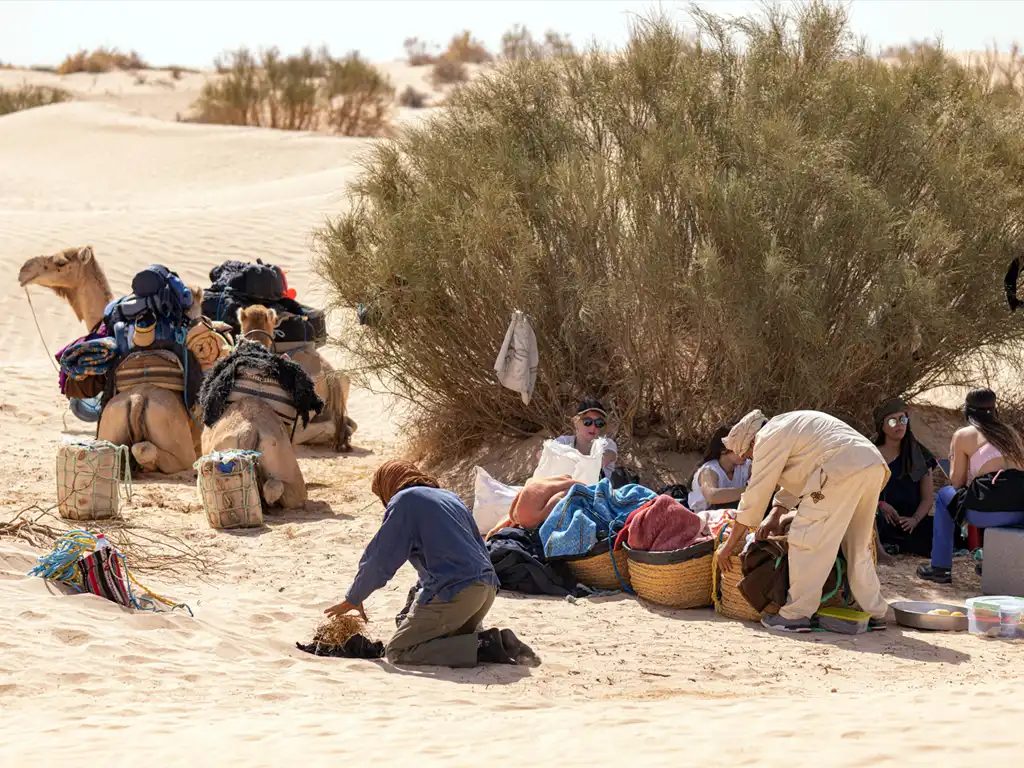
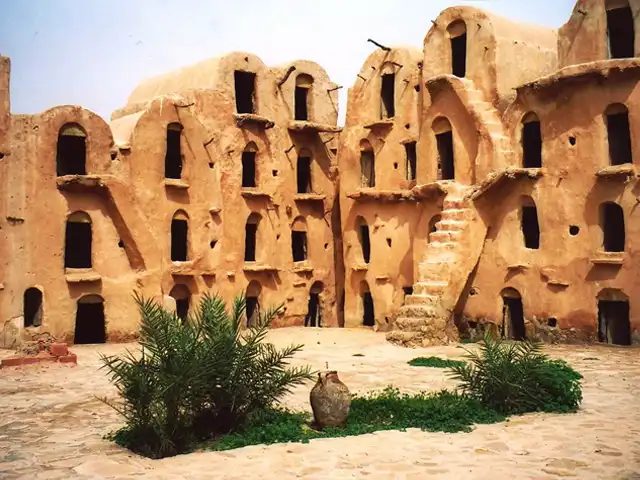
Tunisia has been inhabited since the Middle Palaeolithic. The Aterian, Capsian and Neolithic cultures flourished in what was then a verdant region, home to giraffes, elephants and cattle. The Berbers, ancestors of today's population, settled in the region from 4000 BC onwards.
Key takeaways
- Aterian industry: tanged points
- Capsian sites: snail-shell middens of the south
- First Berber populations around 4000 BC
- Desertification of the Sahara from 3000 BC onwards
Detailed chronology
First humans
Presence of Homo erectus and later Homo sapiens in North Africa. Acheulean tools (hand axes) found at several Tunisian sites (Sidi Zin, El Mekta).
Aterian culture
Middle Palaeolithic stone-tool industry, characteristic of the Maghreb. Sites at Bir El Ater (Algeria) and in Tunisia. Tanged points, first burials.
Capsian civilisation
Mesolithic culture named after Gafsa (Capsa). Burials, snail-shell middens ("rammadiyat"), shell ornaments. Ancestors of the Berber populations. Humid climate, verdant savannah.
Berber settlement
Late Neolithic and Bronze Age. The Berbers (Imazighen) settled across North Africa. Livestock rearing, agriculture, metallurgy. Gradual desertification of the Sahara from 3000 BC onwards.
Phoenician and Carthaginian period
1101 — 146 BC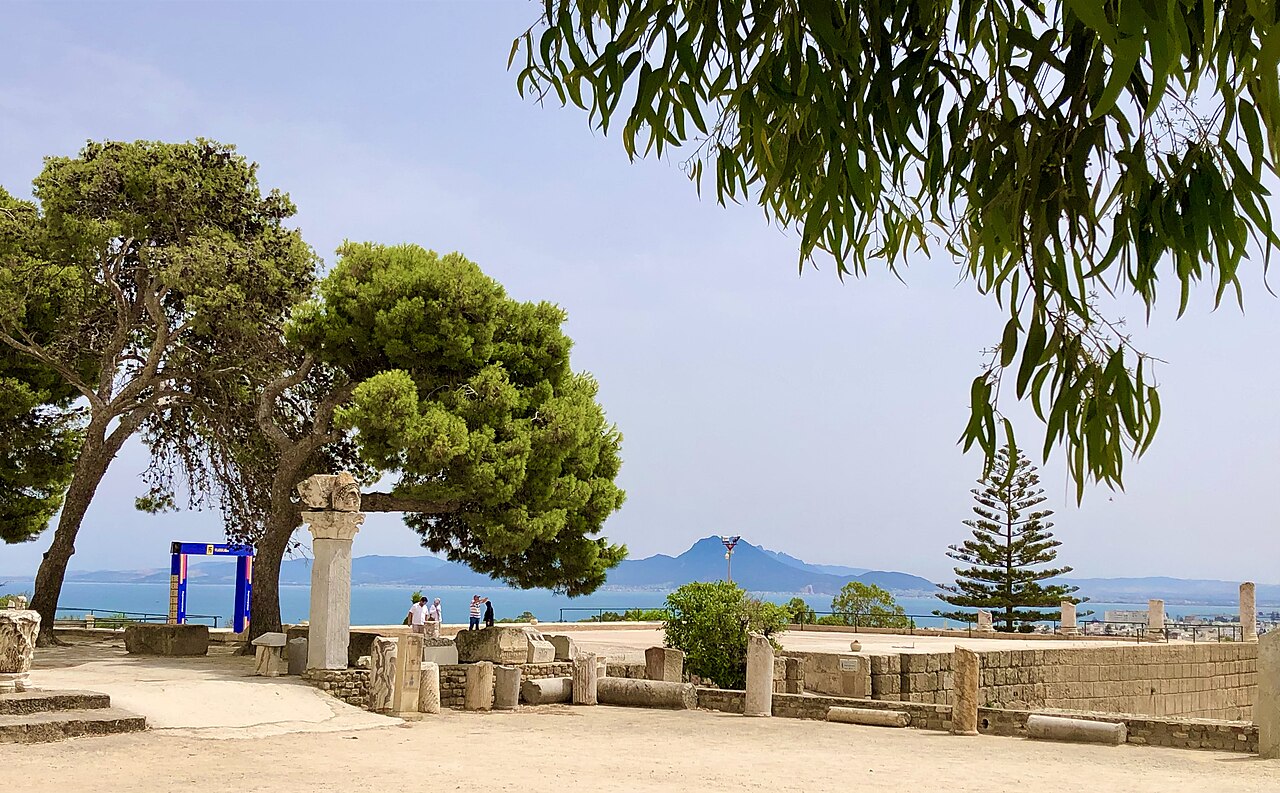
The Phoenicians, merchants from Tyre (Lebanon), founded their first trading posts on the Tunisian coast. Carthage, founded according to tradition by Queen Dido in 814 BC, became within a few centuries the greatest maritime power of the western Mediterranean. Three Punic Wars pitted it against Rome before its total destruction in 146 BC.
Key takeaways
- Carthage founded by Dido in 814 BC
- A trading empire dominating the western Mediterranean
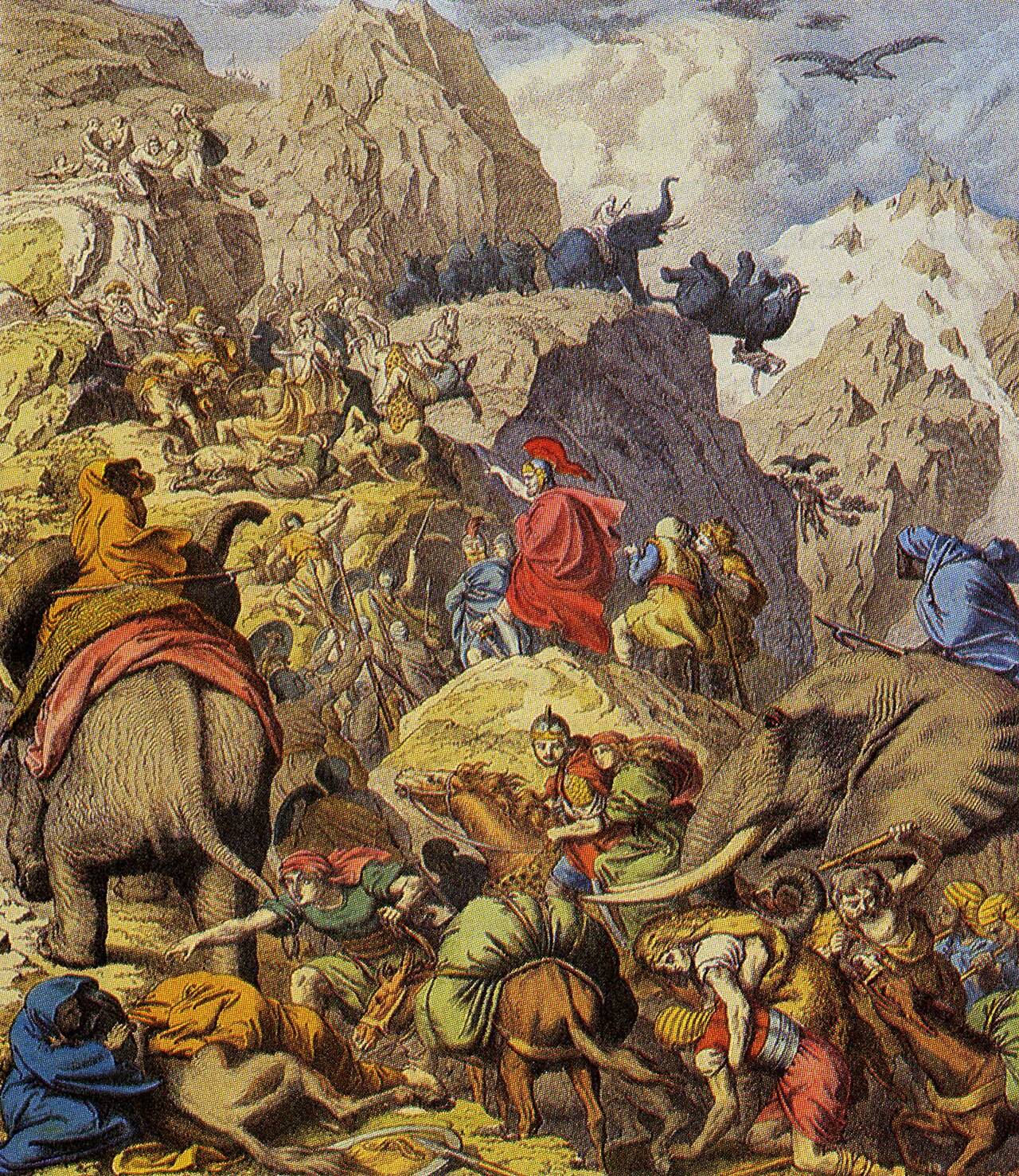
- Hannibal crosses the Alps with 37 elephants (218 BC)
- 3 Punic Wars against Rome
- Total destruction in 146 BC by Scipio Aemilianus
Detailed chronology
Founding of Utica
The first Phoenician trading post in North Africa, predating Carthage by 287 years. Site on the Bay of Tunis (UNESCO 2024 candidate). Became the Roman capital of Africa after the fall of Carthage.
Founding of Carthage
Founded according to tradition by Queen Dido (Elissa), an exile from Tyre. The Phoenician name "Qart Hadasht" means "New City". Legend has it that Dido obtained as much land as an oxhide cut into strips could enclose, covering the hill of Byrsa.
The Carthaginian trading empire
Carthage controlled a maritime trading empire: Spain (Cadiz), Sicily, Sardinia, the Balearics, Morocco. Hanno the Navigator explored the Atlantic coasts of Africa (c. 500 BC), probably as far as Cameroon.
First Punic War
Conflict with Rome over Sicily. The first great naval war in history. Carthaginian defeat. Loss of Sicily and heavy war reparations.
Hannibal Barca
The greatest Carthaginian general. Son of Hamilcar Barca. Raised in Carthage and Spain. Swore eternal hatred of Rome. Crossed the Alps in 218 BC with 50,000 men and 37 elephants. Lightning victories (Lake Trasimene 217, Cannae 216).
Second Punic War
Hannibal invaded Italy. Crushing victories at Lake Trasimene and Cannae (216). But Rome held out for 16 years. Scipio Africanus finally defeated Hannibal at the Battle of Zama (202 BC) in Tunisia. Carthage lost its overseas territories.
Third Punic War and destruction
Cato the Elder kept telling the Roman Senate "Carthago delenda est" ("Carthage must be destroyed"). A three-year siege. In 146 BC, Scipio Aemilianus razed the city, put the survivors to the sword and had the ground ploughed and salted. The end of Punic civilisation.
Key figures
Dido (Elissa)
9th century BCMythical founder of Carthage. Phoenician princess of Tyre exiled after the murder of her husband. Legendary suicide after being abandoned by Aeneas.
Hanno the Navigator
6th–5th century BCCarthaginian explorer. Voyaged along the Atlantic coasts of Africa with 30,000 settlers. An account of the journey survives in Greek.
Hamilcar Barca
275–228 BCCarthaginian general, commander in Sicily during the First Punic War. Father of Hannibal. Conquered Spain for Carthage.
Hannibal Barca
247–183 BCThe most famous Carthaginian general. Crossed the Alps with his elephants in 218 BC. Defeated at Zama in 202. Died in exile in Bithynia, poisoning himself to escape the Romans.
Roman period
146 BC — AD 439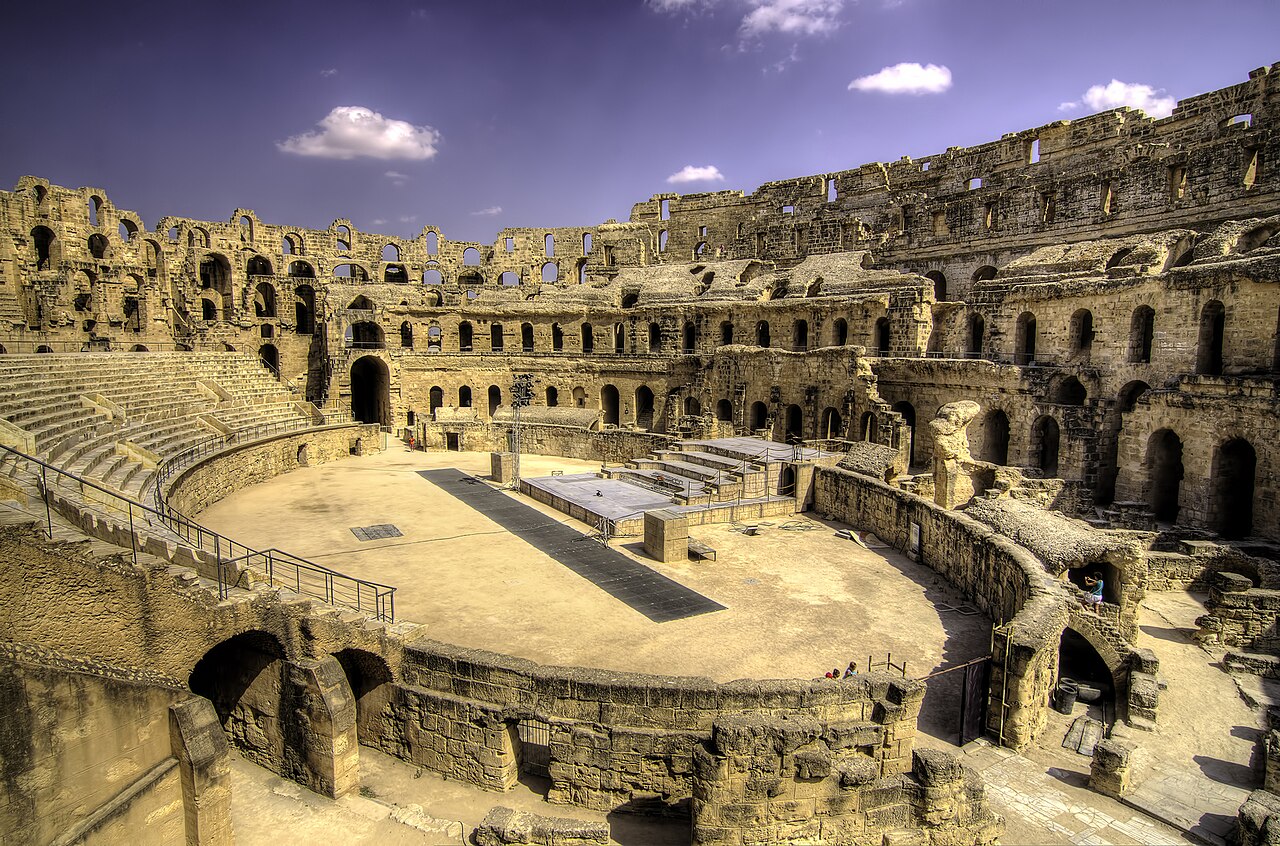
After the destruction of Carthage, Tunisia became the Roman province of Africa Proconsularis. Carthage was refounded by Julius Caesar and Augustus in 29 BC and became the empire's 4th city after Rome, Alexandria and Antioch. The region prospered on olive oil and wheat exported to Rome. Christianity took root early here (Saint Cyprian, Saint Augustine, Tertullian).
Key takeaways
- Roman Carthage: the empire's 4th city (500,000 inhabitants)
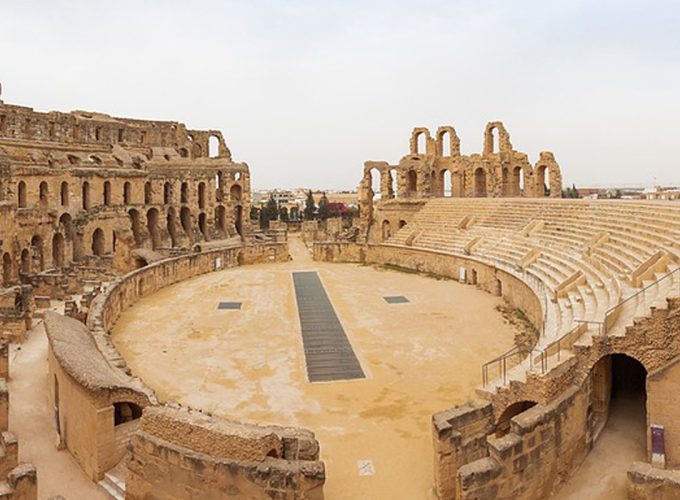
- El Jem amphitheatre (35,000 seats, 3rd largest)
- Zaghouan aqueduct (132 km to Carthage)
- Saint Augustine taught rhetoric in Carthage
- Early Christianisation: Tertullian, Cyprian, Augustine
Detailed chronology
Creation of the province of Africa
Rome organised the conquered territories into the province of Africa Proconsularis. Capital: Utica. Population: Berbers and descendants of the Phoenicians (the "Libyphoenicians").
Refounding of Carthage by Augustus
Julius Caesar began it; Augustus completed the refounding. The new Carthage quickly became a great metropolis: 500,000 inhabitants by the 2nd century. Capital of the province of Africa. The empire's 4th city.
Roman heyday
Massive construction: the Carthage amphitheatre, the Baths of Antoninus (the largest complex in Roman Africa), the Zaghouan aqueduct (132 km), the theatre. Inland, Dougga, Sufetula (Sbeitla), Mactar and Bulla Regia flourished. Olive oil and wheat production.
Tertullian and the first Christians
Tertullian (155–220), the first Latin Christian theologian, was born in Carthage. He laid the foundations of Western theology. Apologetics. The province became a heartland of African Christianity.
Martyrdom of Perpetua and Felicity
Saint Perpetua, a young patrician of Carthage, and Felicity, her slave, were martyred in the Carthage amphitheatre under Septimius Severus. The text "The Passion of Perpetua and Felicity" is a major testimony of early Christianity.
Gordian's revolt at El Jem
Emperor Gordian I was proclaimed emperor at Thysdrus (El Jem) during a revolt against Maximinus Thrax. He commissioned the El Jem amphitheatre. Died the same year (a 22-day revolt).
Saint Cyprian, bishop of Carthage
Cyprian, one of the greatest bishops of the West. Theologian and organiser of the Church of Africa. Martyred in 258 under Valerian. Council of Carthage (256) on the rebaptism of heretics.
Saint Augustine
Augustine of Hippo, the greatest father of the Western Church. Born at Thagaste (Souk Ahras, Algeria), bishop of Hippo (Annaba). Studied and taught rhetoric in Carthage. "Confessions", "The City of God". Died during the Vandal siege of Hippo (430).
Fall of Carthage to the Vandals
Gaiseric's Vandals, arriving from Spain, seized Carthage. The end of Roman Africa. The Vandal Kingdom of Africa lasted until the Byzantine reconquest in 533.
Key figures
Septimius Severus
145-211Roman emperor of African origin (Leptis Magna, Libya), raised in Tunisia. The first African emperor. A stable reign and military victories.
Tertullian
155-220The first great Christian theologian of the West. Born in Carthage. "Apologeticus", "De Praescriptione". Defined the Trinity as "tres personae, una substantia".
Saint Cyprian
200-258Bishop of Carthage, martyr. A major organiser of the Church of Africa. Beheaded under Valerian in 258.
Saint Augustine
354-430Church father, philosopher, theologian. Studied in Carthage. Bishop of Hippo. "Confessions" and "The City of God" are classics of Western thought.
Gordian I
159-238Proclaimed emperor at Thysdrus (El Jem). Commissioned the El Jem amphitheatre. Reigned 22 days before his death.
Vandal and Byzantine period
439 — 698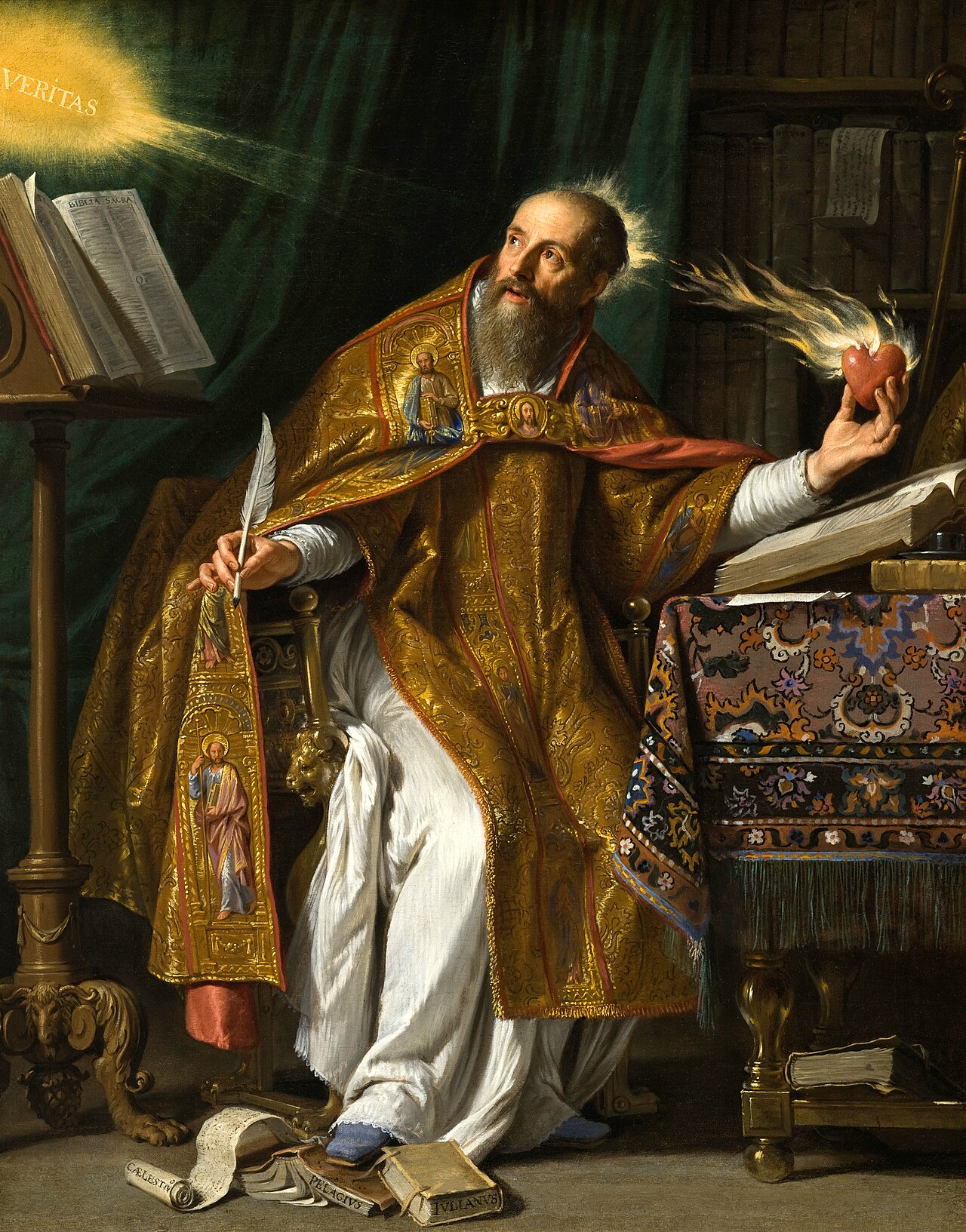
Gaiseric's Vandals, a Germanic people arriving from Spain, founded in Africa the only stable Germanic kingdom of the western Mediterranean. A century later, Justinian tasked general Belisarius with reconquering Africa for the Byzantine Empire (533). The Byzantines held the province until the Arab conquest of 698.
Key takeaways
- Arian Vandal kingdom (439–533) — capital Carthage
- Sack of Rome by Gaiseric (455)
- Byzantine reconquest by Belisarius (533)
- Battle of Sufetula (647) — the first Arab-Byzantine encounter
- Final fall of Carthage in 698
Detailed chronology
Capture of Carthage by the Vandals
Gaiseric, king of the Vandals, took Carthage. The Vandal Kingdom of Africa. Conversion to Arianism (a heretical Christianity). Persecution of Catholics. Piracy across the Mediterranean.
Sack of Rome by Gaiseric
The Vandals sailed up to Rome and plundered it for 14 days — the origin of the word "vandalism". They brought Empress Eudoxia and her daughters back to Carthage.
Byzantine reconquest by Belisarius
Justinian sent Belisarius, his finest general, who landed in Africa. Victories at Ad Decimum and Tricamarum. The Vandal king Gelimer surrendered. Creation of the praetorian prefecture of Africa. Reconstruction of Carthage and many basilicas.
Byzantine heyday
Carthage prospered again. Fortifications were built (Kelibia, Aïn Tounga). Christian basilicas. Mosaics. The province of Africa was one of the economic pillars of the Byzantine Empire.
Battle of Sufetula (Sbeitla)
The first major confrontation between Arabs and Byzantines. The patrician Gregory, who had proclaimed himself emperor of Africa, was killed by the Arabs under Abdallah ibn Sa'd. His daughter was handed over as a slave. Sbeitla was plundered and abandoned.
Fall of Carthage and the end of Byzantine Africa
Hassan ibn Numan destroyed Carthage for good in 697–698. The Byzantines evacuated. Carthage was razed, and its stones were used to build Tunis and Kairouan. The end of 800 years of Roman-Byzantine presence.
Key figures
Gaiseric
389-477King of the Vandals (428–477). Conquered North Africa. Sacked Rome (455). One of the most powerful "barbarian kings". Reigned 49 years.
Belisarius
505-565Justinian's Byzantine general. Reconquered Vandal Africa (533–534) and Ostrogothic Italy. One of the greatest soldiers of late antiquity.
Justinian I
482-565Byzantine emperor (527–565). Reconquests in Africa, Italy and Spain. Codification of Roman law (Corpus Juris Civilis). Hagia Sophia in Constantinople.
The patrician Gregory
?-647Byzantine patrician of Africa who proclaimed himself emperor in 646. Killed by the Arabs at the Battle of Sufetula (Sbeitla) in 647. His daughter was handed over as a slave.
Arab conquest and the Aghlabid era
647 — 909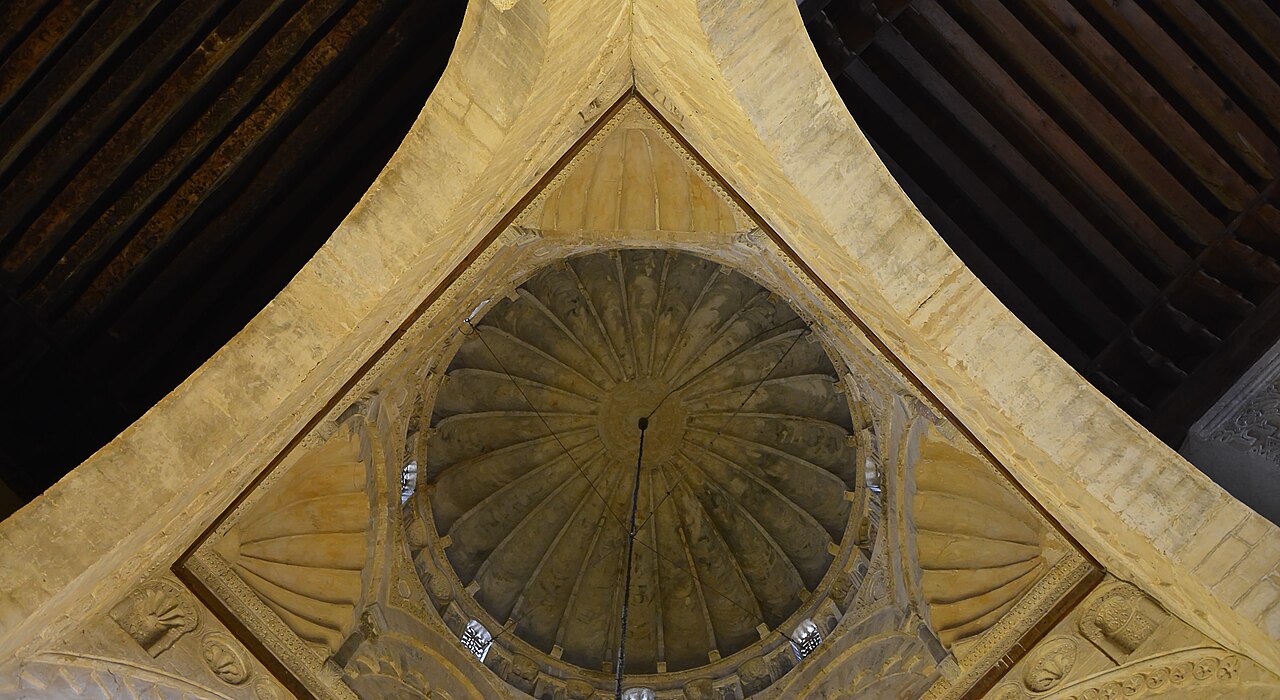
The Arab conquest radically transformed the region: Islamisation, linguistic Arabisation, and the founding of Kairouan (670) as the first great Muslim city of North Africa. In the 9th century, the independent Aghlabid emirate made Kairouan a radiant capital (the Great Mosque of Okba rebuilt, the conquest of Sicily, coastal ribats).
Key takeaways
- Kairouan founded by Oqba ibn Nafi (670)
- Berber resistance of the Kahina (688–703)
- Independent Aghlabid emirate (800–909)
- Conquest of Sicily (827–902)
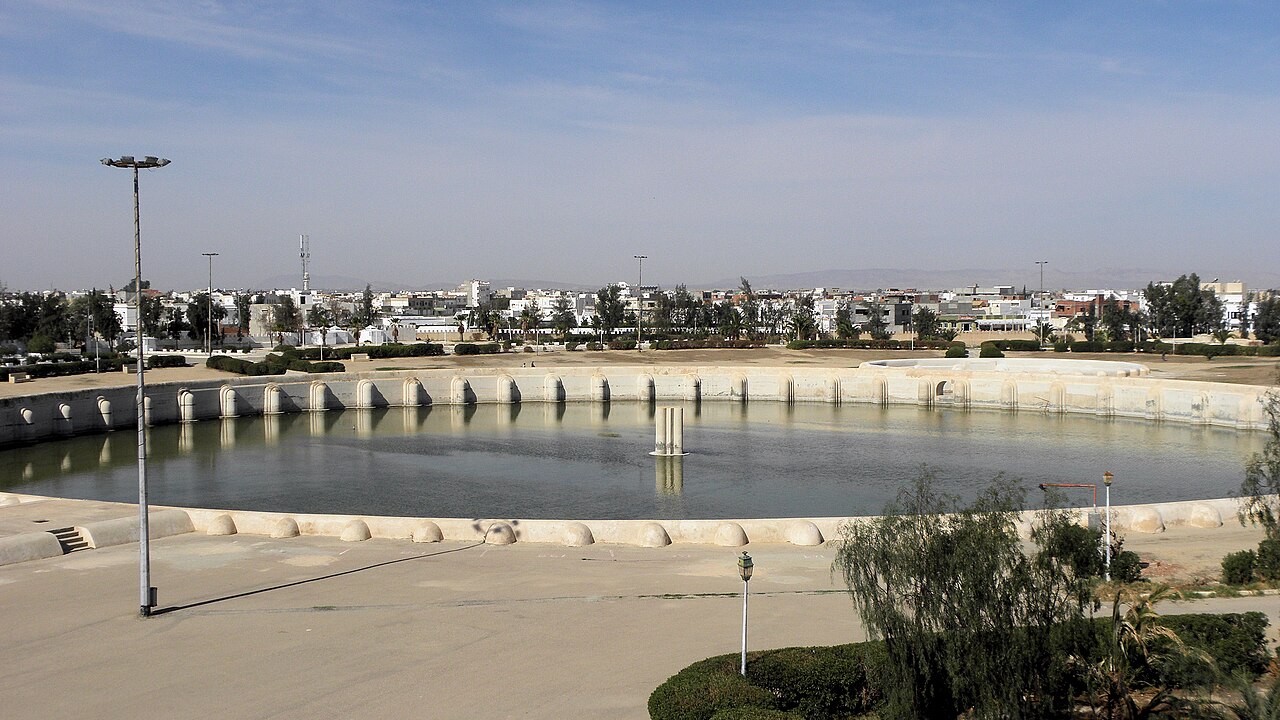
- Kairouan's heyday: the Okba Mosque rebuilt, the Basins, ribats
Detailed chronology
Kairouan founded by Oqba ibn Nafi
The Arab general Oqba ibn Nafi founded Kairouan in the middle of the semi-desert plain as a permanent military and religious base. Legend has it that his she-camel lay down on this spot and a spring miraculously gushed forth. The Okba Mosque was built the same year.
Resistance of the Kahina
Dihya, known as "the Kahina" (the prophetess), Berber queen of the Djerawa tribe, led the resistance against the Arabs. She defeated their armies several times. A scorched-earth strategy. Killed in 703 at Tabarka. A legendary figure of Berber nationalism.
Final conquest and the founding of Tunis
Hassan ibn Numan destroyed Carthage and founded Tunis (Tunes) nearby. African Christianity gradually disappeared in favour of Islam. The Berbers were massively Islamised.
Great Berber revolt
Insurrection of the Kharijite Berbers (a minority branch of Islam) against Umayyad centralisation. The Battle of the Nobles, the Battle of Bagdoura. The Arabs kept their grip, but Kharijism took root in certain regions (Djerba, the Algerian Mzab).
Independent Aghlabid emirate
Ibrahim ibn al-Aghlab obtained autonomy from Baghdad. The Aghlabid dynasty. De facto independence from the Abbasid caliphate. Kairouan a radiant capital. An intellectual, economic and military heyday.
Construction of the Sousse ribat
The Aghlabid emir Ziyadat Allah I ordered the construction of the Sousse ribat (fortress-monastery), one of the oldest and best preserved in the Islamic world. The model for the coastal ribats defending against Byzantine incursions.
Conquest of Sicily
The Aghlabids conquered Byzantine Sicily over 75 years: Mazara (827), Palermo (831), Syracuse (878), Taormina (902). The Emirate of Sicily remained under Aghlabid influence until the Norman conquest (1091).
Rebuilding of the Great Mosque of Okba
Emir Ziyadat Allah I rebuilt the Great Mosque of Kairouan in its present form. 414 reused antique columns, a square minaret (the oldest still standing in the world), a mihrab adorned with Abbasid ceramics. The architectural model for the whole Maghreb and Andalusia.
Aghlabid basins
Creation of Kairouan's two monumental basins (130 m and 37 m in diameter), fed by a 36-km aqueduct from Cherichira. Capacity 50,000 m³. A hydraulic feat studied as a model of medieval Islamic engineering.
Key figures
Oqba ibn Nafi
622-683Arab conqueror, founder of Kairouan (670). Right-hand man of Caliph Mu'awiya. Died in a Berber ambush at Sidi Oqba (Algeria).
The Kahina (Dihya)
?-703Berber warrior queen and prophetess, the last great resister of the Arab conquest. Defeated Hassan ibn Numan several times. Killed at Tabarka. A figure of Berber nationalism.
Hassan ibn Numan
late 7th centuryUmayyad Arab general. Completed the conquest of Tunisia. Destroyed Carthage in 698 and founded Tunis.
Ibrahim ibn al-Aghlab
756-812Founder of the Aghlabid dynasty. Obtained autonomy from Baghdad in 800. The first emir of an independent Arab Maghreb.
Ziyadat Allah I
?-838Aghlabid emir (817–838). Conqueror of Sicily. Rebuilder of the Great Mosque of Kairouan (836). Builder of the Sousse ribat (821).
Fatimid and Zirid period
909 — 1148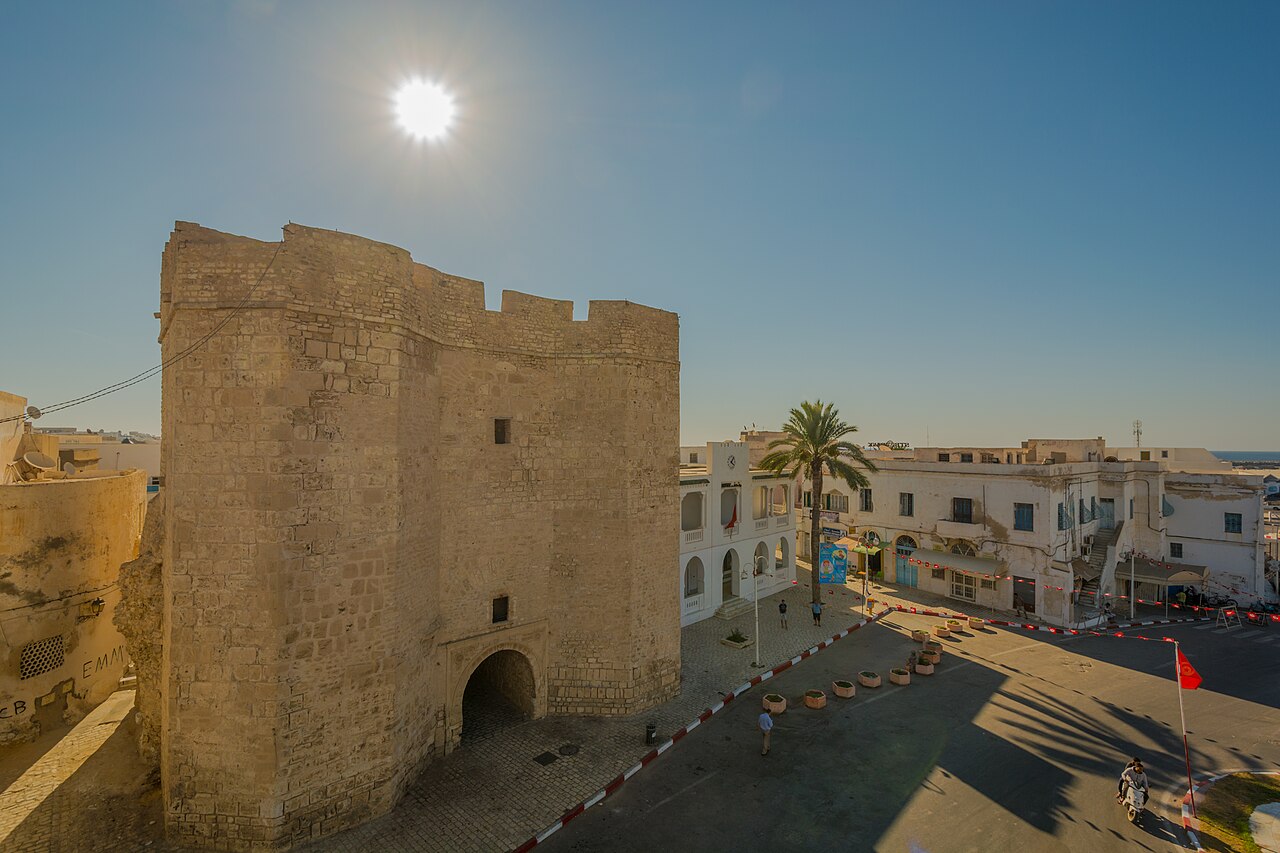
The Ismaili Shia Fatimid dynasty founded Mahdia in 916 and conquered Egypt in 969 (moving its capital to Cairo). The Zirids, their Berber lieutenants, governed Tunisia in their name before seceding. In 1057 the region suffered the devastating invasion of the Banu Hilal.
Key takeaways
- Mahdia founded (916) by the Fatimids
- Conquest of Egypt (969) — Cairo founded
- Zirid secession (1048)
- Catastrophic invasion of the Banu Hilal (1051)
- Sack of Kairouan (1057) — the end of its golden age
Detailed chronology
Rise of the Fatimids
Ubayd Allah al-Mahdi, a claimed descendant of Fatima, daughter of the Prophet, overthrew the Aghlabids. He founded the Ismaili Shia Fatimid dynasty, aiming to win the entire Muslim world back for Shiism.
Founding of Mahdia
Ubayd Allah al-Mahdi founded his new capital, Mahdia, on the peninsula. A geometric urban plan unique in the medieval Mediterranean. Fortress, caliphal palace, military harbour. The Skifa El Kahla still bears witness to it.
Fatimid conquest of Egypt
General Jawhar al-Siqilli conquered Egypt for the Fatimids. He founded Cairo (Al-Qahira) and the Al-Azhar University. The capital of the Fatimid empire moved from Ifriqiya (Tunisia) to Egypt.
Zirid emirate
The first Fatimid ruler of Egypt entrusted Tunisia to his Berber lieutenant Bologhine ibn Ziri, founder of the Zirid dynasty. Capital Kairouan (later Mahdia). In 1048, al-Mu'izz ibn Badis seceded by pledging allegiance to the Sunni caliphate of Baghdad.
Invasion of the Banu Hilal
In retaliation for the Zirid secession, the Fatimid caliph of Egypt unleashed the nomadic Arab tribes Banu Hilal and Banu Sulaym on Ifriqiya. The consequences were catastrophic: devastation, the end of intensive agriculture, the sack of Kairouan in 1057. Linguistic and cultural Arabisation accelerated. Ibn Khaldun would analyse this catastrophe in the 14th century.
Sack of Kairouan
The Banu Hilal plundered and destroyed Kairouan. The holy city never regained its former glory. The Zirids took refuge in Mahdia. The end of Kairouan's golden age.
Norman conquest of Mahdia
Roger II of Sicily, the Norman king, conquered Mahdia, Tunis, Sousse and Kerkennah. A brief Christian occupation (the Norman Kingdom of Africa). The end of the Zirids. Retaken by the Almohads in 1160.
Key figures
Ubayd Allah al-Mahdi
?-934Founder of the Fatimid dynasty. First caliph (909–934). Founded Mahdia (916). Claimed descent from Fatima, daughter of the Prophet.
Jawhar al-Siqilli
928-992Fatimid general. Conquered Egypt in 969. Founded Cairo and the Al-Azhar University. A native of Sicily ("Siqilli").
Bologhine ibn Ziri
?-984Founder of the Zirid dynasty. Berber lieutenant of the Fatimids. Capital at Achir, then Kairouan.
Al-Mu'izz ibn Badis
1008-1062The Zirid emir who broke with the Shia Fatimid caliphate (1048) to align with the Sunni Abbasid caliphate — the cause of the retaliatory Banu Hilal invasion.
Almohad and Hafsid period
1148 — 1574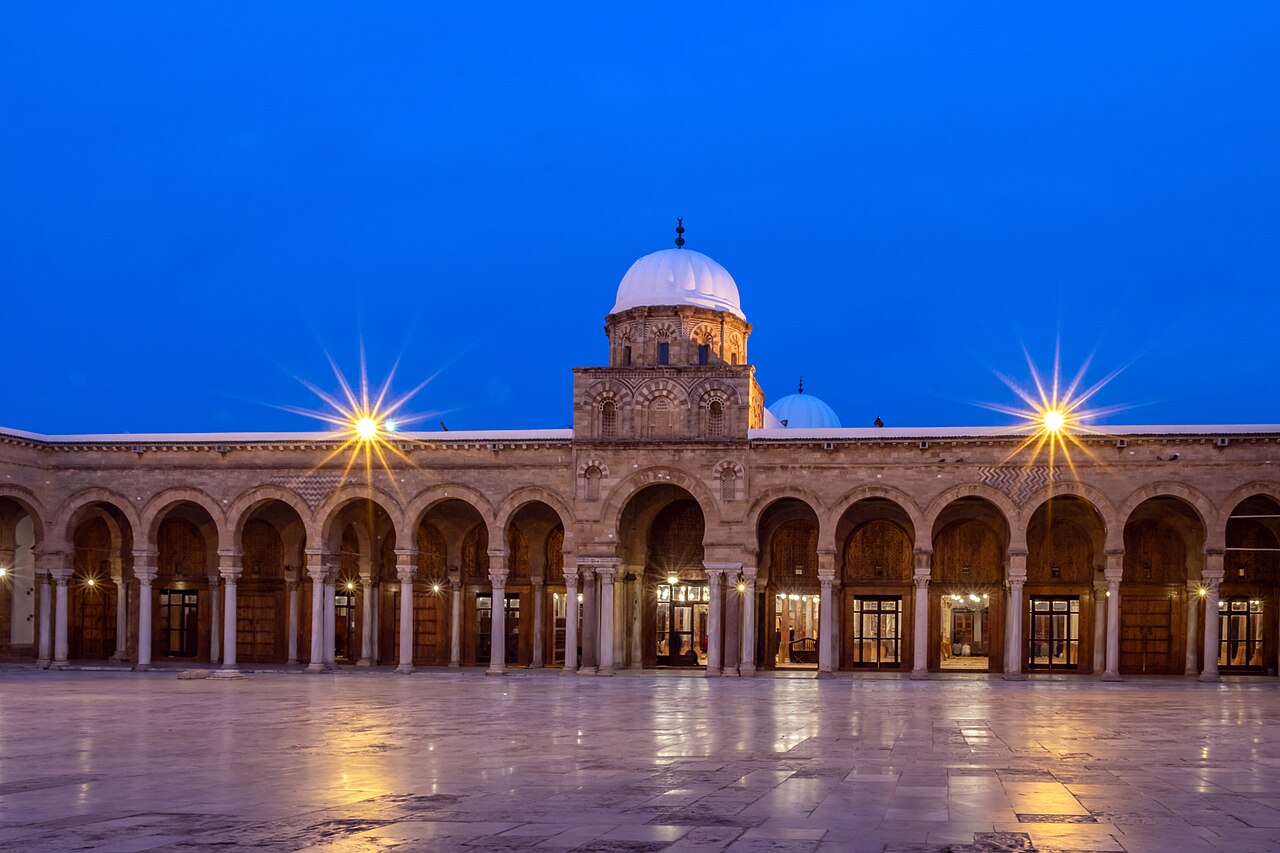
The Moroccan Almohads conquered Tunisia in 1159, briefly unifying the Maghreb. In 1229 their governor Abu Zakariya proclaimed independence and founded the Hafsid dynasty, which ruled from Tunis for 345 years. The medina of Tunis took its present shape. Saint Louis died there in 1270. Battles with Spaniards and Ottomans in the 16th century.
Key takeaways
- Hafsid independence (1229) — capital Tunis
- Saint Louis dies at Carthage (1270)
- Ibn Khaldun born in Tunis (1332) — the father of sociology
- Arrival of the Andalusians expelled from Spain (1492)
- Ottoman conquest (1574) — the end of the Hafsids
Detailed chronology
Almohad conquest
Abd al-Mu'min, the Moroccan Almohad caliph, conquered Ifriqiya, reunifying the Maghreb under Almohad religious unity. Imperial capital: Marrakesh. Tunis was ruled by Almohad governors.
Hafsid independence
Abu Zakariya, the Almohad governor of Tunis, proclaimed independence and founded the Hafsid dynasty. Tunis became the capital of the central Maghreb. The medina of Tunis took its present shape. The Hafsid heyday: 13th–14th centuries.
Death of Saint Louis at Carthage
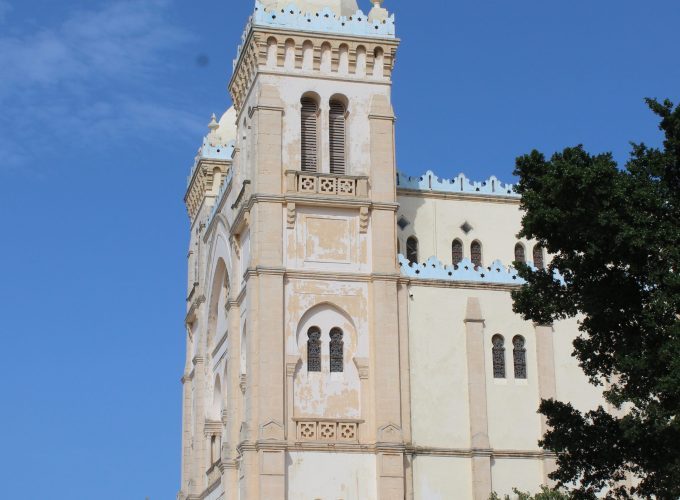
Louis IX, king of France (Saint Louis), led the 8th crusade against Tunis. He landed on the beach at Carthage. A dysentery epidemic ravaged the army. Louis IX died on 25 August 1270. The Saint-Louis Cathedral was built in 1890 on the hill of Byrsa in his memory.
Ibn Khaldun, intellectual giant
Born in Tunis (1332), Ibn Khaldun is one of the greatest historians and sociologists of all time. His "Muqaddimah" ("Prolegomena") is the introduction to his universal history. A forerunner of sociology and political economy. Died in Cairo.
Arrival of the Andalusians
After the fall of Granada and the Spanish Reconquista, the expelled Moors took refuge in Tunisia in great numbers. They settled in the medinas (Tunis, Testour, Cap Bon), bringing their culture with them (architecture, malouf music, agriculture, crafts).
Charles V takes Tunis
Emperor Charles V led a crusade against Tunis to dislodge the Ottoman corsair Khayr ad-Din Barbarossa, who had settled there. Tunis was plundered for three days. Charles V reinstated the Hafsid bey Hassan as a vassal.
Ottoman conquest
Sinan Pasha, at the head of the Ottoman fleet, took Tunis and La Goulette. The definitive end of the Hafsid dynasty (which had ruled for 345 years). Creation of the Ottoman regency of Tunis.
Key figures
Abu Zakariya Yahya
1203-1249Founder of the Hafsid dynasty (1229). The first Hafsid emir of Tunis. Extended his authority over eastern Algeria and Libya.
Saint Louis (Louis IX)
1214-1270King of France (1226–1270). Died at Carthage during the 8th crusade against Tunis (1270). Canonised in 1297. The Saint-Louis Cathedral of Carthage honours his memory.
Ibn Khaldun
1332-1406Historian, sociologist and philosopher born in Tunis. Author of the Muqaddimah. Regarded as the founding father of modern sociology and political economy. A major influence on Western thought (Toynbee, Braudel).
Charles V
1500-1558Holy Roman Emperor (1519–1558) and king of Spain. Took Tunis in 1535. Adversary of Suleiman the Magnificent in the Mediterranean.
Ottoman regency and the Husainid dynasty
1574 — 1881Tunisia became a semi-autonomous Ottoman regency. The Turkish pashas quickly gave way to the deys and then the beys (local rulers). The Husainid dynasty (from 1705) ruled for 252 years. Tunis was a Mediterranean hub, at times allied with the Barbary corsairs. In the 19th century the country modernised (the first Constitution in the Arab-Muslim world in 1861) but ran up catastrophic debts.
Key takeaways
- Husainid dynasty from 1705 (252 years)
- Barbary corsairing (17th–19th centuries)
- Ahmed Bey's reforms: abolition of slavery in 1846
- Fundamental Pact (1857) — civil rights
- First Arab-Muslim Constitution (1861)
Detailed chronology
Semi-autonomous Ottoman regency
Tunis became an Ottoman regency governed by a pasha appointed by the sultan, with a Turkish garrison (janissaries). But real authority quickly passed to the deys (military chiefs) and then the beys (civil rulers).
Muradid dynasty
Ramdane Bey (a Muradid) took effective power. His dynasty ruled for 90 years. Palaces (the Bardo), madrasas and mosques (Sidi Mehrez in Tunis) were built. Battles with the corsairs of Algiers and Tripoli.
Rise of the Husainid dynasty
Hussein I ben Ali, a former Muradid officer of Greek-Corsican origin, seized power and founded the Husainid dynasty, which ruled for 252 years, until 1957. Twenty-two Husainid beys succeeded one another.
Barbary corsairing
The Barbary corsairs of Tunis, Algiers and Tripoli waged privateering war on the Christians of the Mediterranean. Christian slaves in Tunisia: 5,000 to 30,000 depending on the period. A major economic activity (ransoming of captives, booty).
End of Barbary corsairing
The European powers (USA, England, France) forcibly put an end to Barbary piracy. Bombardment of Algiers in 1830. Tunis abolished the enslavement of Christians.
Ahmed Bey's reforms
Ahmed Bey launched modernisation: a regular army, the Bardo Military School (1840), the abolition of slavery (1846), a Tunisian currency. The first Muslim ruler to abolish slavery. Official visit to France (1846).
Fundamental Pact
Mohamed Bey promulgated the Fundamental Pact (Ahd al-Aman): equality of all before the law, religious freedom, guarantees for non-Muslims. The first civil-rights text in the Arab-Muslim world.
First Constitution in the Arab-Muslim world
Mohamed Sadok Bey promulgated the first Constitution in the Arab and Muslim world. Limits on the Bey's powers, a (timid) separation of powers, a Supreme Council. Suspended in 1864 after a popular revolt.
Popular insurrection
A massive revolt against the doubling of the poll tax (mejba), led by Ali Ben Ghedhahem. The Bey suspended the Constitution and crushed it militarily. Tunisia's first modern popular movement.
Bankruptcy and financial trusteeship
The regency defaulted on its payments (a debt of 240 million francs). Creation of the International Financial Commission (France, England, Italy) to oversee Tunisian finances — a foretaste of the loss of sovereignty.
Key figures
Hussein I ben Ali
1675-1740Founder of the Husainid dynasty (1705). Of Greek-Corsican origin. Reigned 25 years. Stabilised the regency.
Hammouda Pasha
1759-1814Bey of Tunis (1782–1814). A long 32-year reign. Massive building: the Sahibet El-Tabaa madrasa, palaces. Repelled the Algerians (Battle of Kef, 1807).
Ahmed Bey
1806-1855Bey of Tunis (1837–1855). A moderniser. Abolished slavery in 1846 (before the USA). The Bardo Military School. Visited France.
Mohamed Sadok Bey
1813-1882Bey of Tunis (1859–1882). Promulgated the first Constitution in the Arab world (1861). Reigned into the protectorate era (1881).
Khayr ad-Din Pasha
1820-1890Reformer, prime minister (1873–1877). Author of the Mukaddima (1867), a reformist treatise. Modernised education (the Sadiki College). A forerunner of Tunisian nationalism.
French protectorate
1881 — 1956On 12 May 1881, the Treaty of Bardo established the French protectorate over Tunisia. France controlled diplomacy, the army and finances; the Bey retained his symbolic authority. Rapid modernisation (railways, ports, schools, colonial agriculture) but also the rise of a powerful nationalist movement with Bourguiba as its figurehead. Independence on 20 March 1956.
Key takeaways
- Treaty of Bardo (12 May 1881)
- Creation of the Destour (1920), then the Neo-Destour (1934)
- Habib Bourguiba, leader of the nationalist movement
- Tunisian Campaign (1942–43) — Rommel defeated
- Independence on 20 March 1956
Detailed chronology
Treaty of Bardo
On the pretext of Khroumir incursions into Algeria, the French army occupied Tunisia. Bey Mohamed Sadok signed the Treaty of Bardo establishing the French protectorate. France controlled diplomacy and the army.
Convention of La Marsa
The protectorate deepened. France now also controlled the Tunisian administration, finances and justice. Creation of the French resident-general (de facto governor). The Bey became a ceremonial authority.
Colonial modernisation
Railways were built (Tunis–Algiers 1898), the modern port of Bizerte (1898), medina improvements, schools, hospitals. Agricultural colonisation: 800,000 hectares handed to Europeans (Italians and French). The Avenue Habib Bourguiba was cut through Tunis.
Young Tunisians movement
The first modern nationalist movement, led by Ali Bach Hamba and Béchir Sfar. It demanded equality with the settlers. The Djellaz riots (1911): anti-Italian riots. First strikes. The movement was suppressed in 1912.
Creation of the Destour
Sheikh Abdelaziz Thaalbi founded the Tunisian Constitutional Liberal Party (Destour). The first mass nationalist political party. It demanded a return to the 1861 Constitution and the end of the protectorate.
Creation of the Neo-Destour
Habib Bourguiba, a young lawyer, split the Destour and founded the Neo-Destour, a more modern and combative party. Bourguiba became the undisputed leader of Tunisian nationalism. Imprisoned several times.
Tunisian Campaign (WWII)
Rommel's Afrika Korps and the Allies (British, Americans, Free French) clashed in Tunisia. 250,000 German and Italian prisoners. The Battle of Mareth, El Alamein. Tunisia liberated on 13 May 1943. The American cemetery at Gammarth (2,841 graves).
Armed struggle for independence
Guerrilla resistance in central Tunisia (the "fellagas"). Assassination of Farhat Hached (trade unionist, 1952) and Hédi Chaker (1953). Harsh French repression. Pierre Mendès France offered autonomy (1954). The Bardo Accords (3 June 1955).
Independence of Tunisia
Pierre July, French minister for Moroccan and Tunisian Affairs, and Tahar Ben Ammar, the Tunisian prime minister, signed the independence protocol in Paris. Tunisia became a sovereign state. Bourguiba returned in triumph.
Key figures
Pierre Cambon
1843-1924French resident-general in Tunisia (1882–1886). Architect of the protectorate system. A moderniser.
Sheikh Abdelaziz Thaalbi
1876-1944Founder of the Destour (1920). Author of "La Tunisie martyre" (1920), an anti-colonialist pamphlet published in France. A reformist theologian.
Habib Bourguiba
1903-2000Father of independence, founder of the Neo-Destour (1934), first president of the Republic (1957–1987). A Sorbonne graduate. Imprisoned several times by the French.
Farhat Hached
1914-1952Trade unionist, founder of the UGTT (1946). A figure of Tunisian nationalism. Assassinated by the Red Hand (a French terrorist organisation) on 5 December 1952.
Tahar Ben Ammar
1889-1985Prime minister at independence (1954–1956). Signatory of the autonomy accords and then the independence protocol.
Republic of Tunisia
1957 — today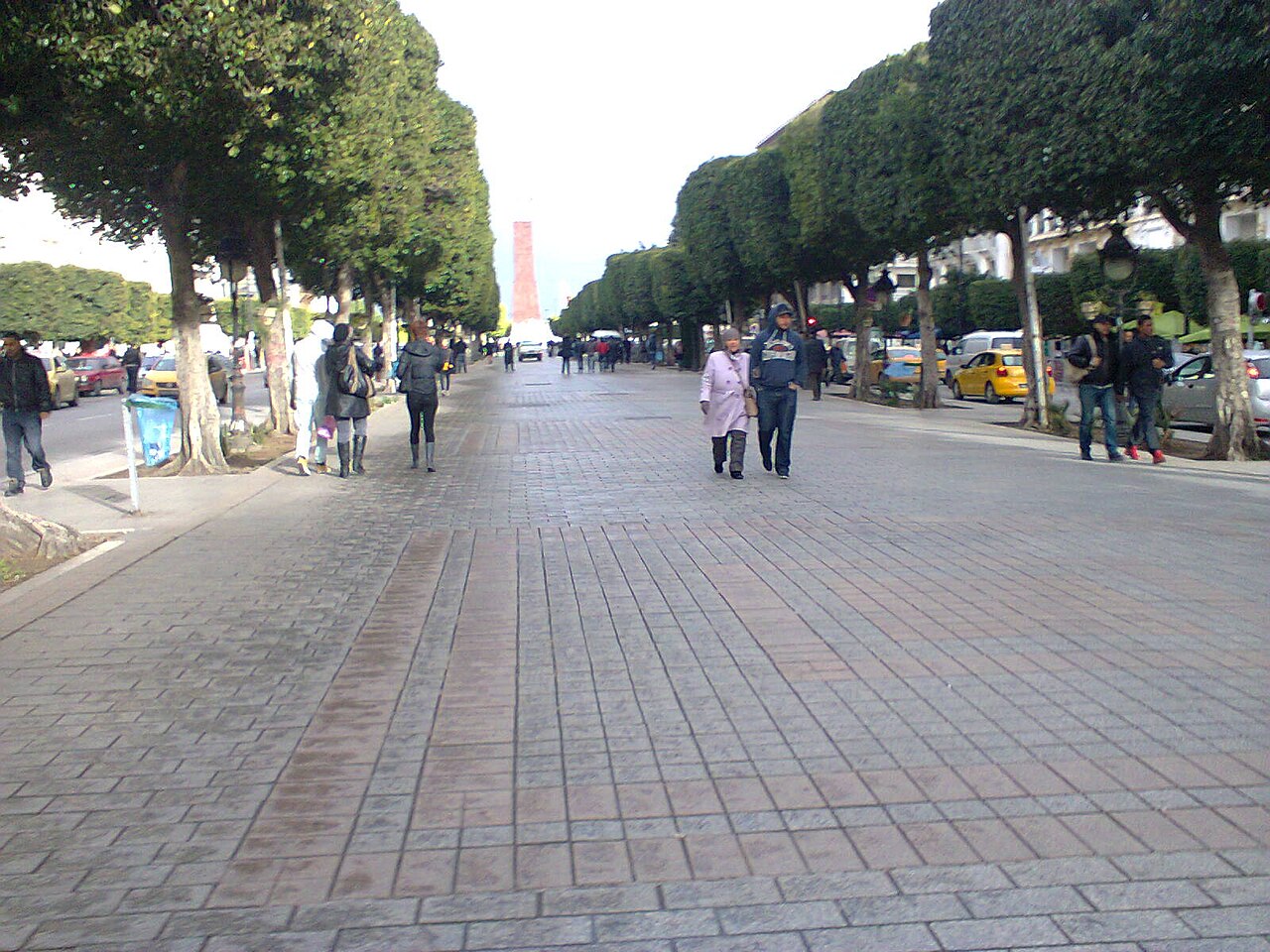
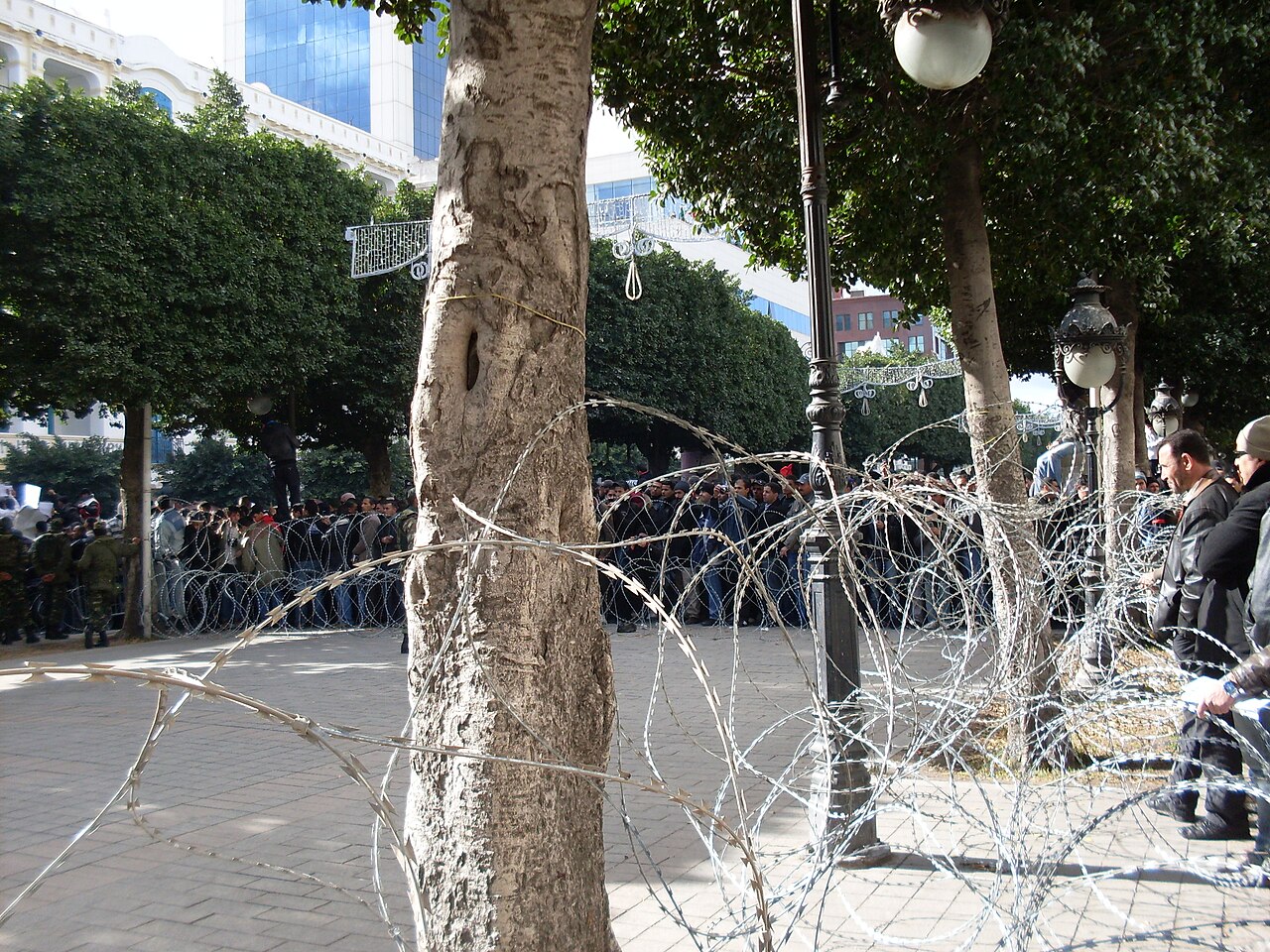
On 25 July 1957, the Constituent Assembly proclaimed the Republic and deposed Bey Lamine. Habib Bourguiba became the first president. Accelerated modernisation (the Code of Personal Status for women, education, health). Ben Ali's coup in 1987, then the Jasmine Revolution in 2011 (the first uprising of the Arab Spring). The democratic Constitution of 2014. Political crisis 2021–2024 under Kais Saied.
Key takeaways
- Proclamation of the Republic (25 July 1957)
- Code of Personal Status — women's rights (1956)
- Bourguiba the moderniser (1957–1987)
- Jasmine Revolution (14 January 2011)
- Democratic Constitution (2014) — Nobel Prize 2015
- Democratic crisis under Kais Saied (2021–)
Detailed chronology
Proclamation of the Republic
The Constituent Assembly deposed Bey Lamine and abolished the monarchy. Tunisia became a Republic, with Habib Bourguiba as its first president. The date is now Republic Day.
Code of Personal Status
Promulgated a few months after independence, it abolished polygamy, established judicial divorce (a right for both spouses) and set a minimum age for marriage. A revolutionary text for the Arab-Muslim world. The date is now Women's Day.
Bourguiba's presidency
Thirty years in power. Modernisation: free compulsory education, schooling for girls, family planning (1964 — the first Muslim country), nationalisations. A pro-Western policy, Maghreb balance. Bourguiba became "president for life" in 1975.
Multi-party politics legalised
Bourguiba officially authorised multi-party politics. Several parties were legalised: the MDS, the PCT (communist). But the Destourian Socialist Party remained hegemonic. The first multi-party legislative elections.
Ben Ali's coup
Prime Minister Zine El-Abidine Ben Ali deposed Bourguiba (aged 84, declared senile by 7 doctors) under Article 57 of the Constitution — the "medical coup". Bourguiba was kept under house arrest in Monastir until his death (2000).
The Ben Ali regime
Twenty-three years in power. Economic development (4–5% annual growth), tourism, infrastructure. But growing authoritarianism: rigged elections (Ben Ali re-elected with 99.98% in 2009), corruption (the Trabelsi clan), repression. Tunisia ranked among the most repressive regimes in North Africa.
Self-immolation of Mohamed Bouazizi
In Sidi Bouzid, street vendor Mohamed Bouazizi set himself on fire after being humiliated by the police. His death on 4 January 2011 triggered a wave of massive demonstrations across Tunisia. The start of the "Jasmine Revolution".
Fall of Ben Ali
After four weeks of massive demonstrations and deaths (300+ killed by the police), Ben Ali fled to Saudi Arabia. The end of 23 years of dictatorship. The start of the Arab Spring (Egypt, Libya, Syria and Yemen would follow). Tunisia is the only country to have achieved its democratic transition.
First free elections
Election of the Constituent Assembly. Ennahdha (a moderate Islamist party) came first (37%). The Troika coalition with Ettakatol (left) and the CPR (centre). Moncef Marzouki became president.
Democratic Constitution
Promulgation of the most progressive Constitution in the Arab world: democracy, separation of powers, human rights, gender parity on electoral lists, freedom of conscience. Internationally acclaimed.
Presidency of Beji Caid Essebsi
The first democratically elected president (2014 election). Aged 92 at his inauguration. A policy of stabilisation. Died in office in July 2019.
Nobel Peace Prize
The Tunisian National Dialogue Quartet (UGTT, UTICA, LTDH, Bar Association) received the Nobel Peace Prize for saving Tunisia's democratic transition in 2013–2014, after the political assassinations (Chokri Belaid, Mohamed Brahmi).
Election of Kais Saied
An independent academic constitutionalist, Kais Saied was elected president (72.7% in the run-off) against media magnate Nabil Karoui. A campaign with no advertising and minimal funding. Elected on a platform of direct democracy and anti-corruption.
Major political crisis
Kais Saied dismissed the prime minister, suspended Parliament and concentrated power in his own hands. The opposition denounced the measures as a "constitutional coup". They were approved by most of the population in the face of the economic and health crisis (Covid).
New Constitution
A referendum approved a new Constitution (94.6% yes, but a turnout of only 30%). A hyper-presidential regime. A drastic reduction in Parliament's powers. Criticised by international NGOs.
Re-election of Kais Saied
Re-elected for a second term with 90.7% of the vote in an election with no serious competition (the main opponents imprisoned or barred from running). International criticism of the democratic backsliding.
Key figures
Habib Bourguiba
1903-2000Founding father of modern Tunisia. First president (1957–1987). A moderniser. The Code of Personal Status. Died in Monastir.
Zine El-Abidine Ben Ali
1936-2019Authoritarian president (1987–2011). Ousted by the Jasmine Revolution. Exiled in Saudi Arabia until his death.
Beji Caid Essebsi
1926-2019The first democratically elected president (2014–2019). A post-revolution stabiliser. Died in office.
Kais Saied
1958-President since 2019. A constitutionalist. Elected on an anti-corruption platform. Criticism over democratic backsliding since 2021.
Wassila Bourguiba
1912-1999Bourguiba's second wife (married 1962–1986). A major political influence. An iconic first lady.
Mohamed Bouazizi
1984-2011The street vendor who set himself on fire on 17 December 2010 in Sidi Bouzid — the trigger of the Jasmine Revolution and the Arab Spring.