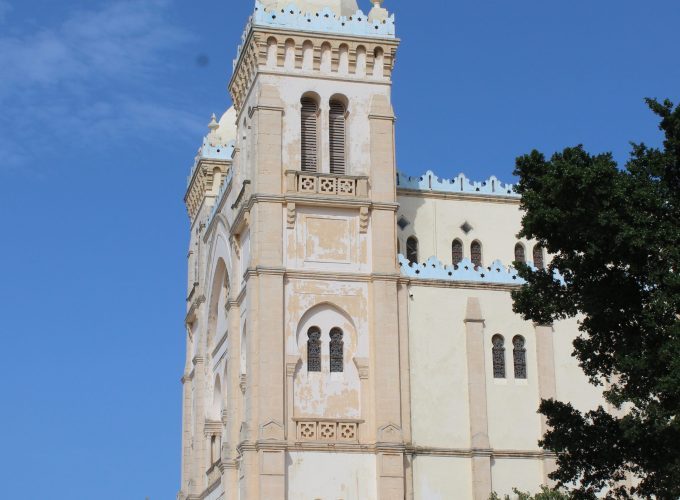
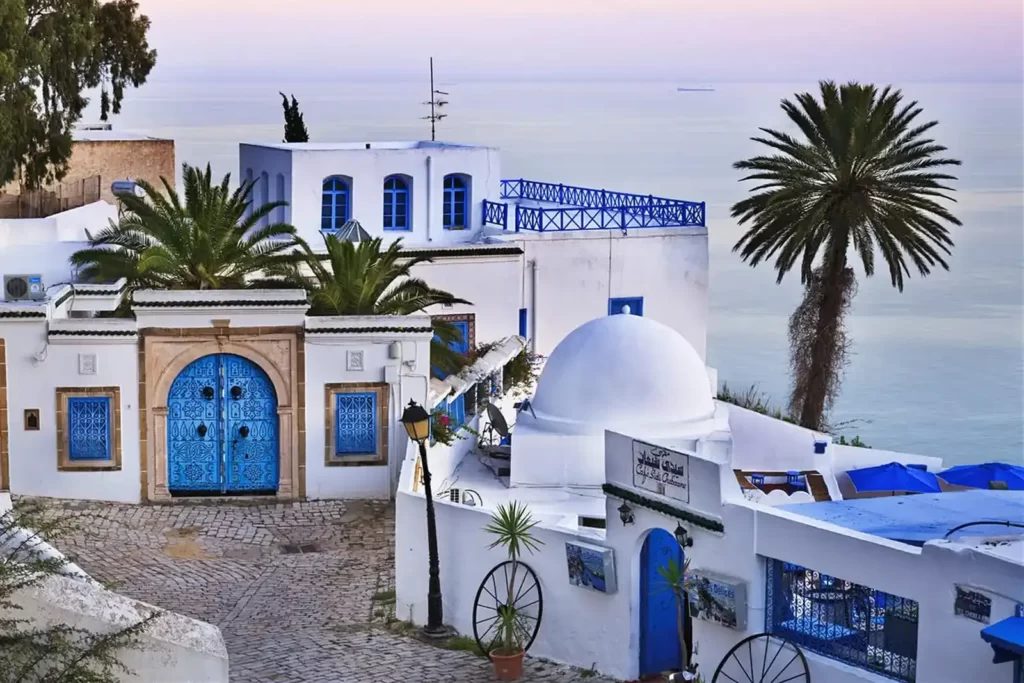
Archaeological site of Carthage
Carthage · Tunis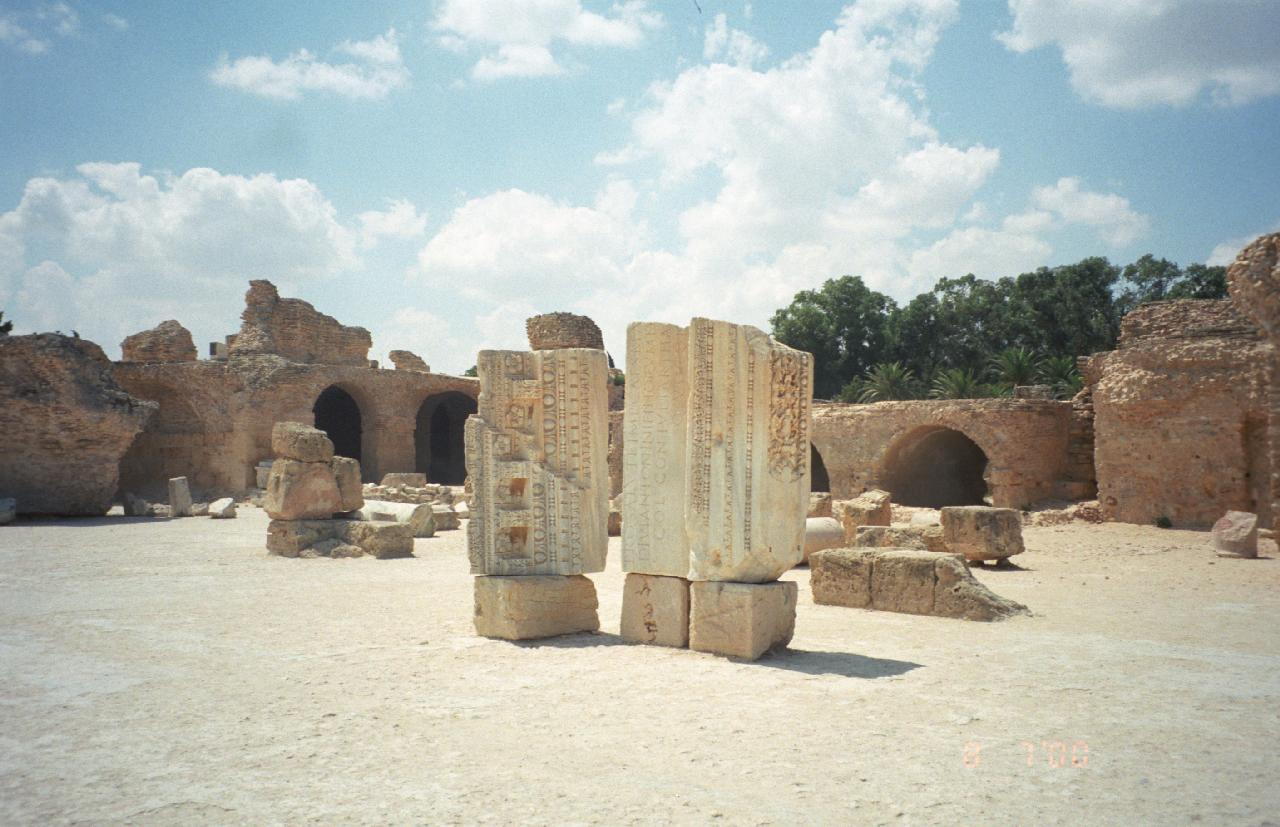
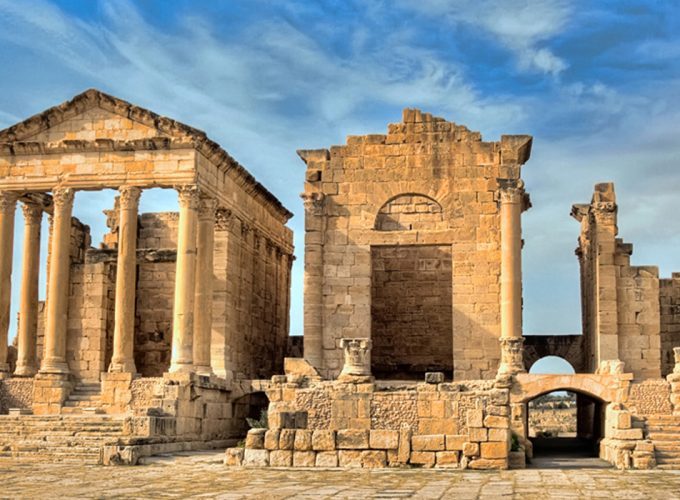
Founded by the Phoenicians in 814 BC, Carthage became the greatest maritime power of the western Mediterranean, Rome's rival for 700 years. Destroyed in 146 BC and refounded by Augustus, it became the 4th city of the Roman empire and the capital of the province of Africa Proconsularis. Today its 9 exceptional archaeological sites form one of the most important ancient ensembles in the Mediterranean.
History
Founded by Queen Dido of Tyre in 814 BC according to tradition. Hannibal Barca grew up here before attacking Rome with his elephants in 218 BC. Destroyed by Scipio Aemilianus in 146 BC at the end of the 3rd Punic War. Refounded by Julius Caesar and Augustus in 29 BC as a Roman colony. 500,000 inhabitants in the 2nd century AD. Saint Augustine taught here. Conquered by the Vandals (439) and Byzantines (533), then razed for good by the Arabs (697), who founded Tunis nearby.
Main monuments
- Byrsa Hill — Punic acropolis and Roman forum
- Baths of Antoninus — the largest bath complex in Roman Africa (35,000 m²)
- Punic ports — horseshoe-shaped basins for 220 ships
- Roman theatre — 7,500 seats (International Festival)
- Tophet of Salammbô — Punic sanctuary
- Roman villas with mosaics in situ
- Zaghouan aqueduct — 132 km
- Damous El Karita basilica — 5th century, Latin-cross plan
UNESCO justification
Criteria (ii) Bears witness to Phoenician expansion in the Mediterranean. (iii) Exceptional testimony to the vanished Punic civilisation. (vi) Linked to major historical events (the Punic Wars, Christianisation, the life of Saint Augustine).
Prices: 12 DT pass valid 24h for the 9 sites + national museum · See the destination →
Medina of Tunis
Tunis · Tunis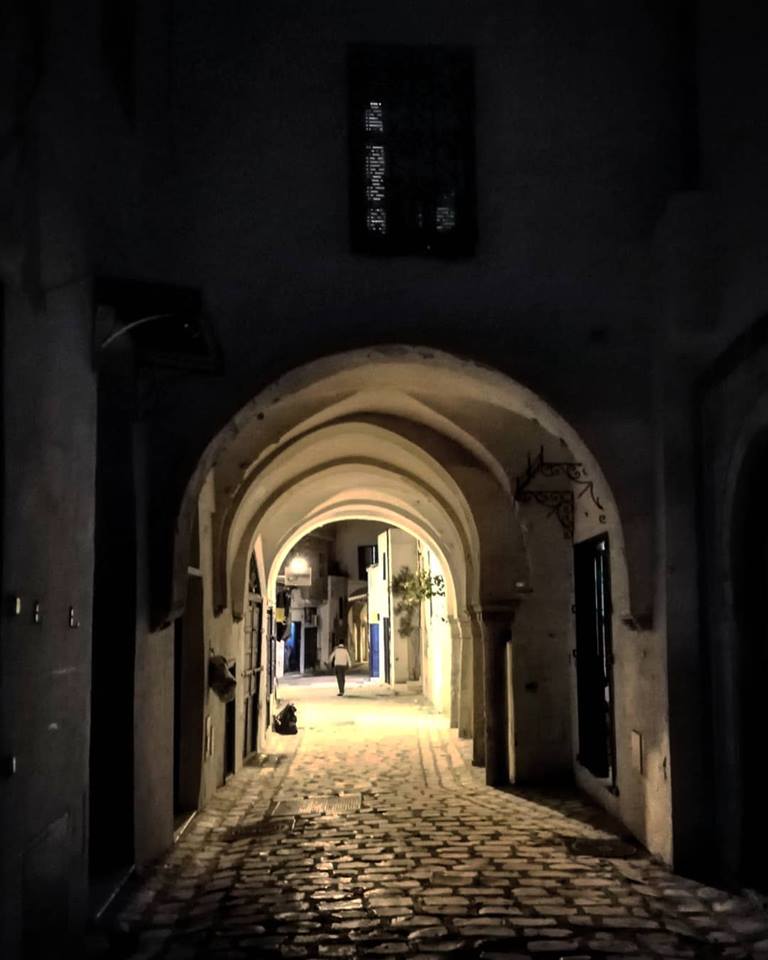
The largest preserved Arab medina in the Maghreb (270 hectares, 700 listed monuments). The historic heart of Tunis since the 9th century, it reached its peak under the Hafsids (1229–1574) with a population of 100,000. The Ez-Zitouna Mosque, the second great Islamic university of the Maghreb after Kairouan, is its spiritual and intellectual centre.
History
Founded around 698 by Hassan ibn Numan after the destruction of Carthage, but it was under the Aghlabids (9th century) that the medina took shape. The Ez-Zitouna Mosque was built in 732 and enlarged in 864. Under the Hafsids (1229–1574), Tunis became the capital of a powerful emirate: madrasas, palaces, souks and hammams multiplied. In the 18th century, the Husainids added Dar El Bey and the Bab El Bhar (Porte de France). The French protectorate preserved the medina by building the European city alongside it.
Main monuments
- Ez-Zitouna Mosque — 732, 200 reused antique columns
- Slimania Madrasa — 18th century, a remarkable Quranic school
- El Mountaciriya Madrasa — 16th century
- Souk El Berka — former slave market, now the gold market
- Souk El Attarine — the perfume souk
- Souk of the Chechias — traditional red caps
- Hammam El Pacha — 16th century, still in use
- Dar Othman — Hafsid-Ottoman palace
- Sidi Mehrez Mosque — 17th century, domed
UNESCO justification
Criteria (ii) Considerable influence on Islamic architecture in the Maghreb. (iii) Exceptional testimony to medieval Islamic civilisation. (v) An outstanding example of traditional human settlement.
Prices: Free to visit, no entrance fee · See the destination →
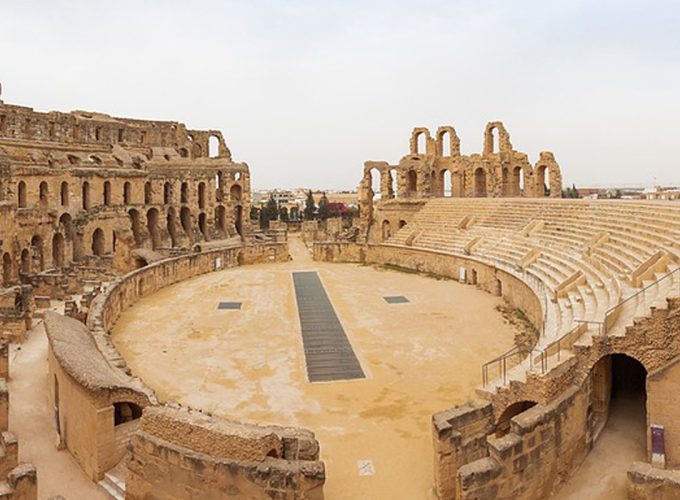
El Jem Amphitheatre
El Jem · Sahel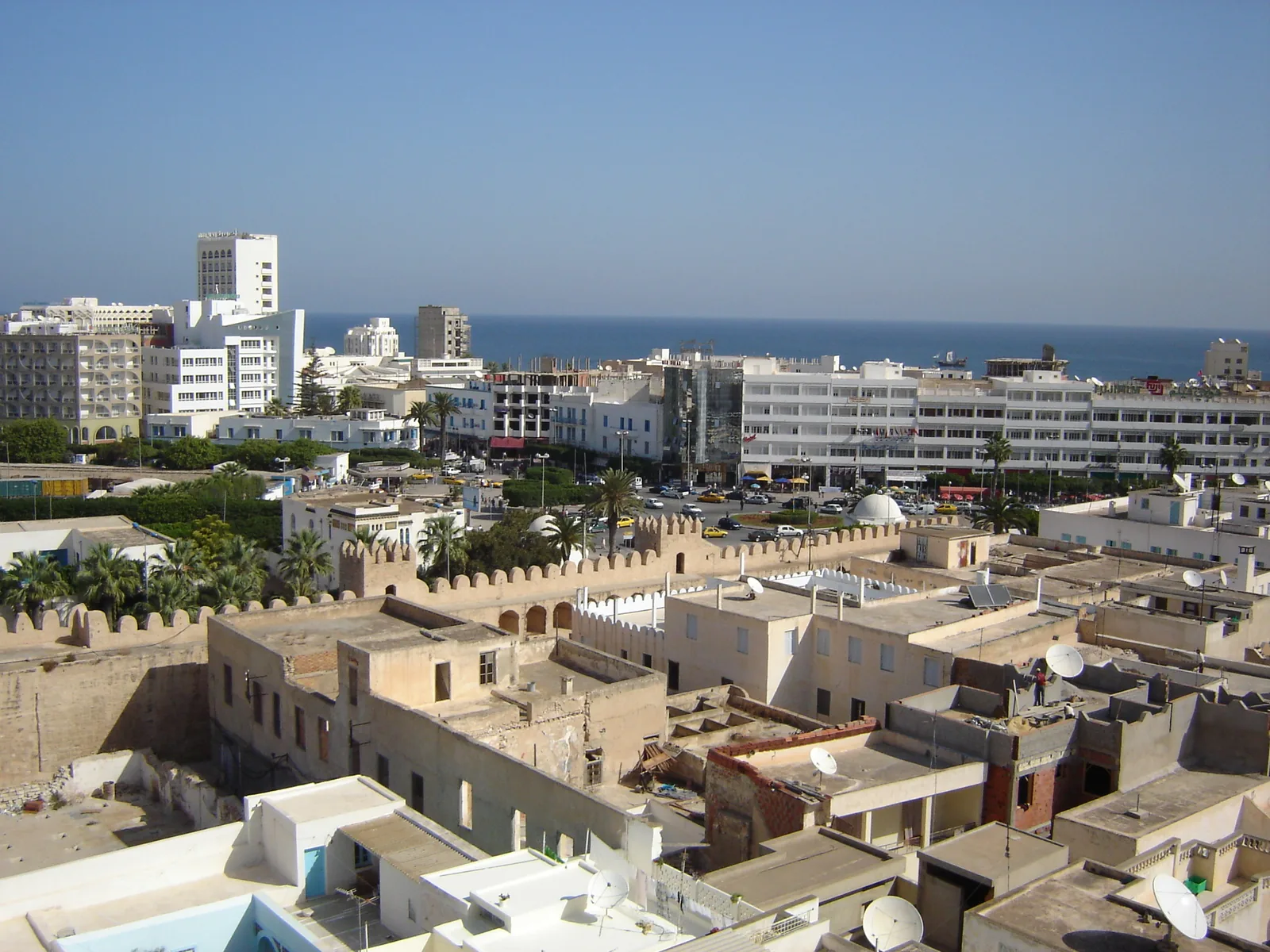
The 3rd-largest amphitheatre of the Roman world after the Colosseum (Rome) and Capua (Italy). 35,000 seats, 148 m long, 36 m high. Commissioned in AD 238 by Emperor Gordian I during his revolt against Rome. The mismatch between its capacity (35,000) and the population of Thysdrus (30,000) testifies to the region's extraordinary wealth at the time.
History
Built in AD 238–240 under Emperor Gordian I, but probably never fully completed. It survived the Vandals, the Byzantines and the Arab conquest. In the 7th century, the Berber prophetess Kahina resisted the Arabs here (688). In the 13th century, the Hafsids used it as a citadel. In 1695, the people of Tunis sheltered here from Bey Mohamed, who ordered the bombardment of the west façade to crush the resistance. In the 19th century the site served as a materials quarry for Sousse and Mahdia before being protected. Host of the International Symphonic Music Festival since 1985.
Main monuments
- Outer façade with 3 tiers of arcades — 70% intact
- Visitable underground galleries — wild-beast cells, gladiators' ascent
- Arena drainage and watering system
- Breach in the west façade — bombarded in 1695 by Bey Mohamed
- Small neighbouring amphitheatre (1st century, 10,000 seats)
UNESCO justification
Criteria (iv) An outstanding example of an architectural type illustrating a historical period. (vi) Linked to major historical events.
Prices: 12 DT pass amphitheatre + mosaics museum · See the destination →
Ichkeul National Park
Bizerte · North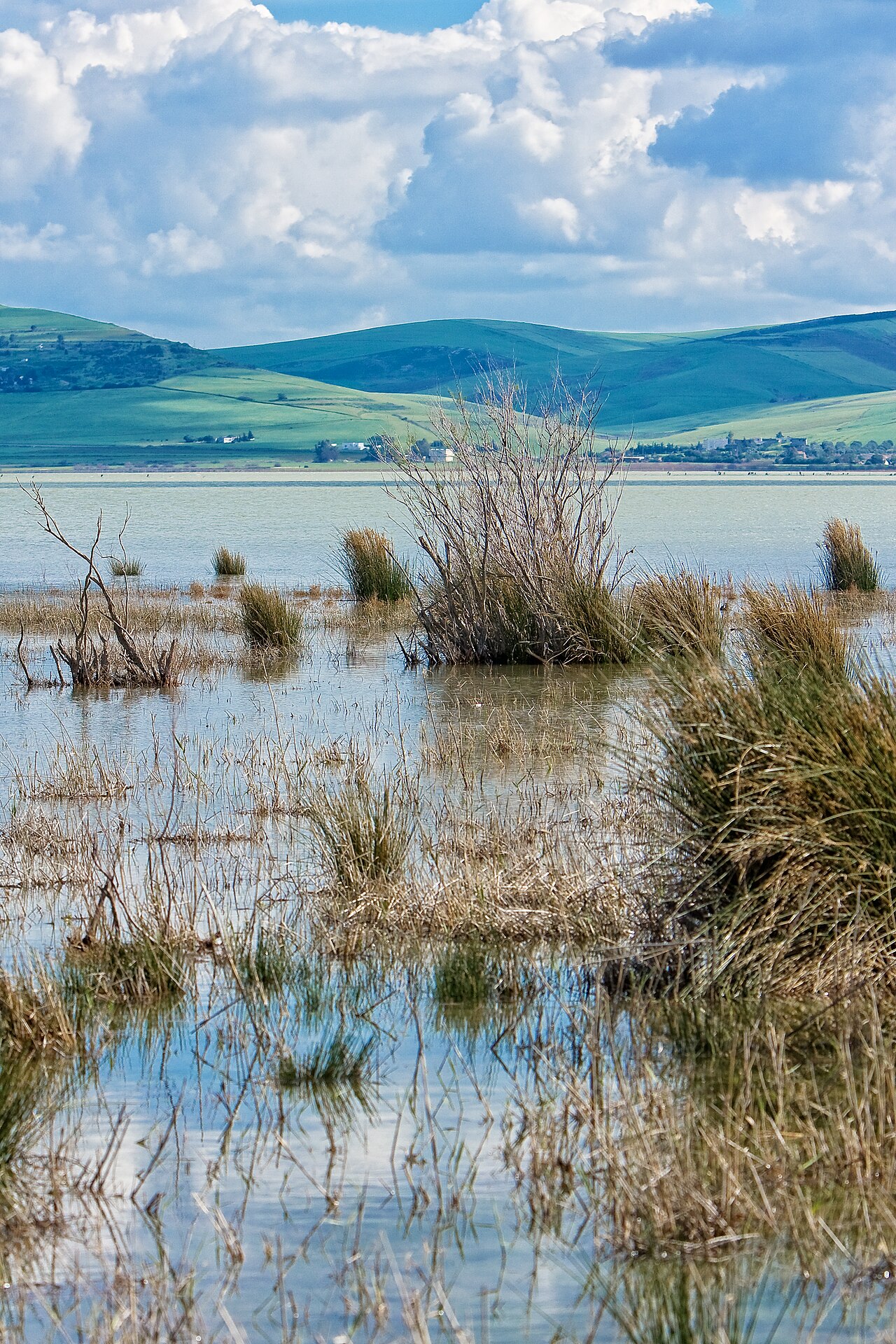
A lake and wetlands south-west of Bizerte, one of the last great lakes of North Africa. A Ramsar site (1980) and UNESCO site (1980). 200 species of migratory birds stop here between Europe and Africa: flamingos, greylag geese, ducks, coots, herons. Mount Ichkeul (511 m) rises above the lake. A reserve of reintroduced Barbary deer.
History
The lake has existed since the Tertiary. Under the Roman Empire it was an imperial hunting ground (Barbary deer). In the 13th century the Hafsids made it a royal estate. Under the French protectorate, hunting was regulated. A national park in 1980; UNESCO the same year. Dams built on the upstream wadis (1985–1995) altered the water balance: the site was placed on the List of World Heritage in Danger (1996–2006), then removed after protection measures. Today the site remains threatened by drought and rising salinity.
Main monuments
- Lake Ichkeul — 89 km², salinity varying with the seasons
- Marshes — 25 km² of wetlands
- Mount Ichkeul — 511 m, a wildlife refuge
- Interpretation centre and ecomuseum
- Hot springs of Mount Ichkeul
UNESCO justification
Criterion (x) The most representative and important natural habitats for in-situ conservation of biological diversity.
Prices: 5 DT park entrance · See the destination →
Punic town of Kerkouane and its necropolis
Kerkouane · Cap Bon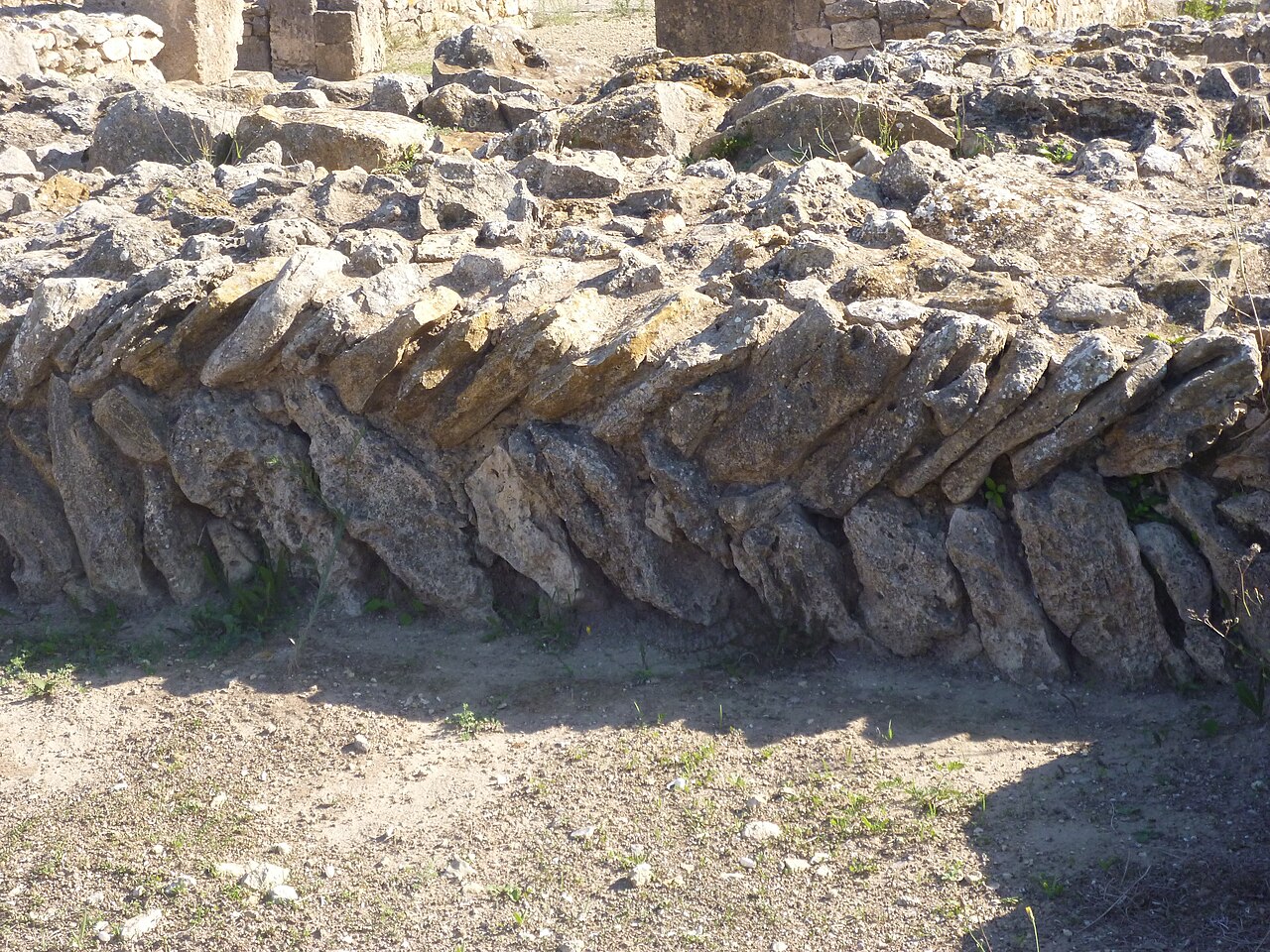
The only Punic town in the world not rebuilt after the destruction of Carthage in 146 BC. Its Punic town planning and domestic architecture are perfectly preserved. Discovered in 1952. UNESCO 1985 (extended 1986 to include the necropolis). Exceptional testimony to everyday Punic civilisation: atrium houses, clay bathtubs, purple-dye workshops, regular street grids.
History
Founded by the Phoenicians in the 6th century BC under the name Iazani. A mid-sized town (2,000 inhabitants) that prospered on purple dye, trade and Cap Bon agriculture. Plundered by Agathocles of Syracuse in 310 BC, destroyed by the Romans during the First Punic War (256 BC), then abandoned for good after the fall of Carthage in 146 BC. Its unique feature: while all the other Punic towns were razed and rebuilt by the Romans, Kerkouane was simply left abandoned. Discovered by chance in 1952 by a shepherd.
Main monuments
- Regular grid-pattern street plan
- Atrium houses with clay bathtubs
- Purple-dye workshops (murex secretions)
- Mosaic pavings with Tanit signs
- Necropolis of Arg El Ghazouani — 200 tombs
- Columned sanctuary
- Archaeological museum on site
UNESCO justification
Criterion (iii) Unique and exceptional testimony to a vanished (Punic) civilisation. A site without equal in the world.
Prices: 8 DT pass site + museum · See the destination →
Medina of Sousse
Sousse · Sahel
The purest preserved Aghlabid medina in the Maghreb, still ringed by its 9th-century ramparts (2.2 km, intact). Built from 821 by the Aghlabid emirs as a military outer harbour to defend the coast against Byzantine incursions from Sicily. The ribat (fortress-monastery) and the Great Mosque are among the oldest and best preserved in the Islamic world.
History
Phoenician Hadrumetum (Sousse) (9th century BC), then a Roman colony under Trajan. In the 3rd century, an important port for Sahel olive oil. In the 9th century, under the Aghlabids, Sousse became Kairouan's military outer harbour. The ribat (821) and the Great Mosque (851) were built to defend the coast. The Fatimids and then the Hafsids developed the city. Under the Ottomans (16th century) and the Husainids, Sousse remained an important port. Seaside tourism took off in the 1970s with Port El Kantaoui (1979), the first integrated resort in the Maghreb.
Main monuments
- Ribat of Sousse — 821, the oldest and best preserved in the Islamic world
- Great Mosque — 851, without a minaret (rare)
- Kasbah with the Khalef El Fata tower (859) — one of the oldest lighthouses in the world
- Catacombs of the Good Shepherd — 5 km of early-Christian galleries (15,000 tombs)
- Souk El Reba — 13th-century vaulted roof
- Unbroken 2.2 km ramparts
- Archaeological museum in the Kasbah
UNESCO justification
Criteria (iii) Exceptional testimony to the early days of Islam. (iv) An outstanding example of 9th-century Islamic military architecture. (v) A representative traditional human settlement.
Prices: Kasbah museum pass 8 DT, Ribat 5 DT, Great Mosque 3 DT · See the destination →
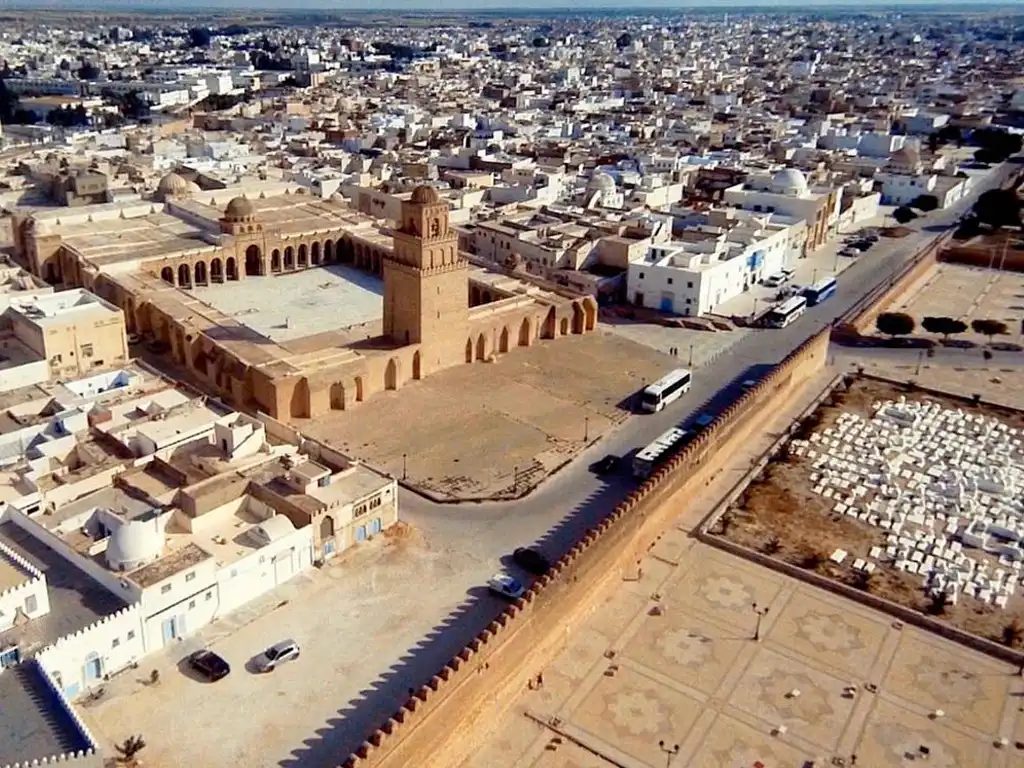
Kairouan
Kairouan · Inner Sahel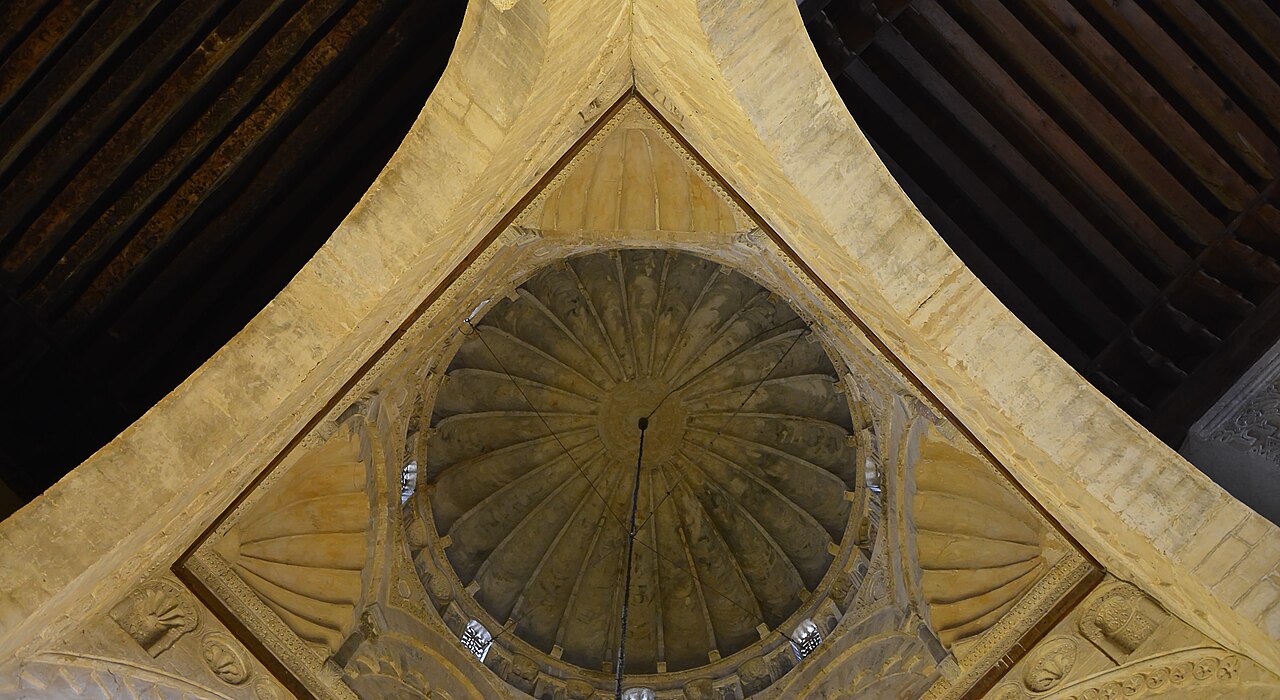
The first Muslim city of North Africa (founded in 670) and the 4th holy city of Islam after Mecca, Medina and Jerusalem. The Great Mosque of Okba, the architectural model for the entire Muslim West, and its medina form an exceptional ensemble bearing witness to the Aghlabid heyday (9th century) and the birth of Islamic art in the Maghreb.
History
Founded in 670 by Oqba Ibn Nafi in the middle of the semi-desert plain. Under the Aghlabids (800–909), the capital of a powerful emirate semi-independent of Baghdad. Its heyday: the Great Mosque rebuilt in 836, the Aghlabid Basins dug, renowned madrasas training the finest jurists of the Maghreb. Under the Fatimids (909–973) and then the Zirids, Kairouan remained a major intellectual centre until the sack by the Banu Hilal in 1057. Non-Muslims were barred from the medina until 1881. Today it is a living place of pilgrimage and the capital of the Tunisian carpet.
Main monuments
- Great Mosque of Okba — 670/836, the oldest in the Maghreb
- Sidi Sahbi Mausoleum (Mosque of the Barber) — 17th century, a companion of the Prophet
- Mosque of the Three Doors — 866, the oldest decorated mosque façade in the world
- Aghlabid Basins — 9th century, 130 m in diameter, 50,000 m³ capacity
- Sidi Abid Ghariani Mausoleum — 14th-century Hafsid
- Bir Barouta — sacred well linked to Zamzam (legend)
- El Mouradia Madrasa — 1670
UNESCO justification
Criteria (i) A masterpiece of human creative genius. (ii) A considerable interchange of influences. (iii) Exceptional testimony to a civilisation. (v) A traditional human settlement. (vi) Linked to the birth of Islamic art.
Prices: 12 DT pass valid for the 4 main monuments · See the destination →
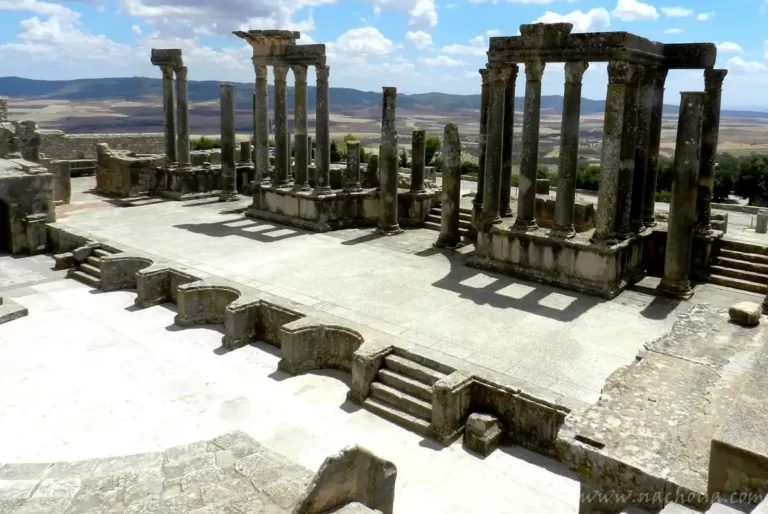
Archaeological site of Dougga (Thugga)
Dougga · North-West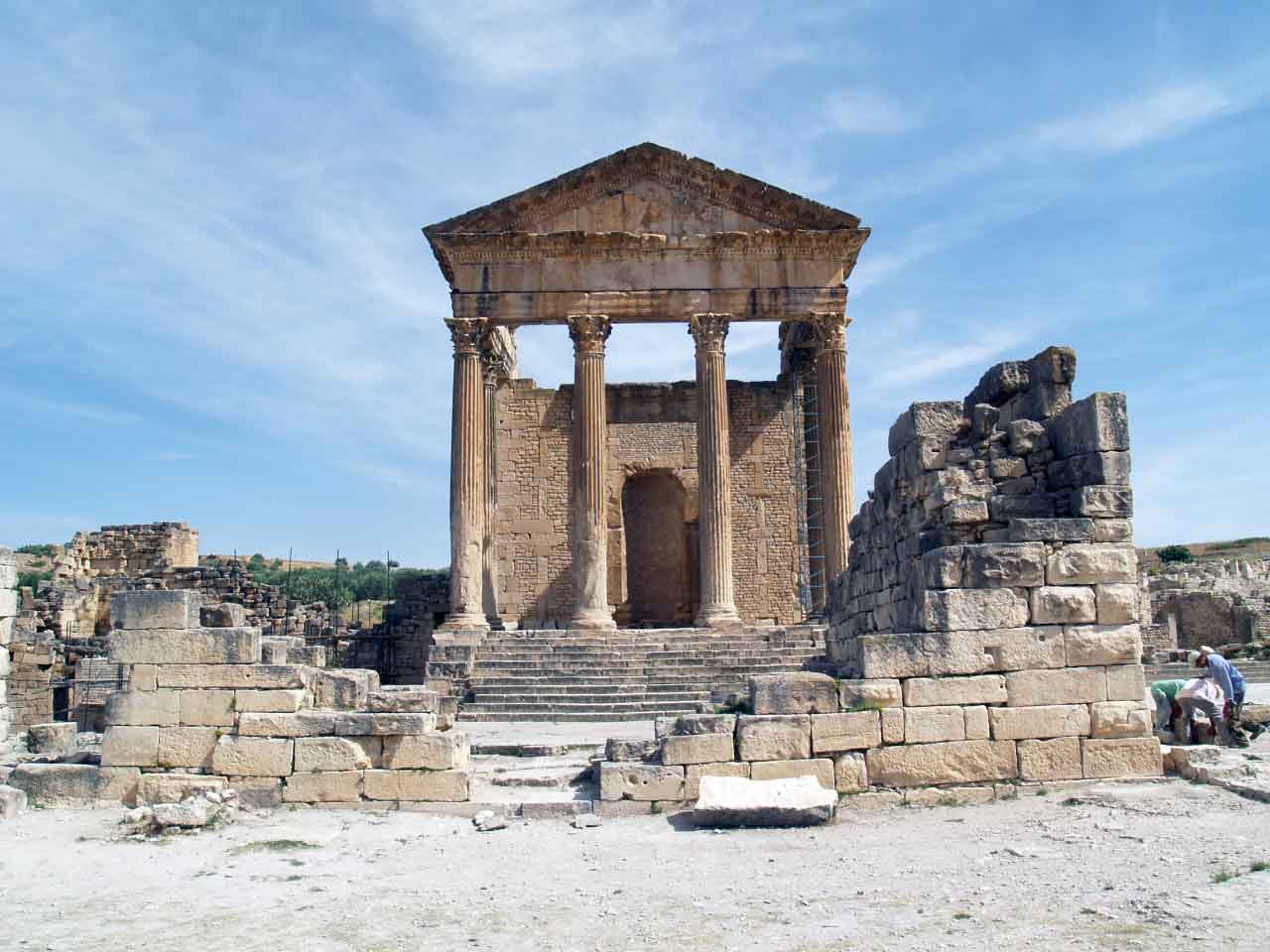
The best-preserved Berber-Roman town in North Africa. Perched on a rocky spur at 600 m altitude, 100 km south-west of Tunis. Exceptional testimony to the fusion of Numidian, Punic and Roman cultures. 70 hectares of remains (capitol, theatre, Libyco-Punic mausoleum, baths, market, temples). An almost intact site, as the town was never rebuilt after its abandonment in the 19th century.
History
Inhabited from the 4th century BC by the Numidians. Under Massinissa (203–148 BC), Thugga was part of the Numidian kingdom, as the Libyco-Punic mausoleum (2nd century BC) attests. Annexed by Rome in 46 BC, it became a Roman town. Its heyday came under Antoninus and Marcus Aurelius (2nd century AD): the capitol, theatre and temples were built. A Christian town in the 5th century. Conquered by the Vandals and then the Byzantines (Christian basilicas). Arab conquest in the 7th century. In the 13th century, a medieval village settled on the Roman forum. Abandoned in the 19th century by order of the French authorities to preserve the remains. An almost intact site.
Main monuments
- Capitol — 2nd century AD, dedicated to Jupiter, Juno and Minerva
- Theatre — AD 168, 3,500 seats, still used for performances
- Libyco-Punic mausoleum — 2nd century BC, unique in the world, 21 m high
- Square of the Winds — forum
- Temples: Saturn, Caelestis, Tellus, Venus
- Market and cisterns
- Baths of the Cyclopes
- Mosaics in situ
- House of the Trifolium (probably a pleasure house)
UNESCO justification
Criterion (iii) Exceptional testimony to a vanished (Numidian-Roman) civilisation, with a rare degree of preservation.
Prices: 8 DT site pass · See the destination →
Djerba: testimony to a settlement pattern on an island territory
Djerba · Djerba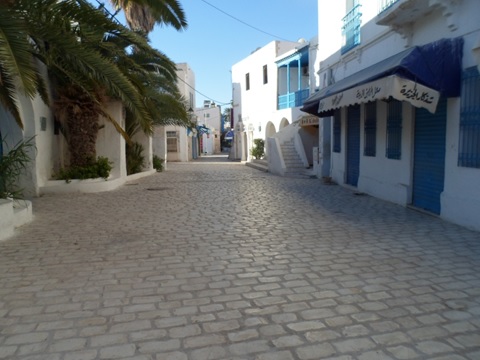
A recent inscription (UNESCO 2023). Djerba is recognised for its exceptional model of settling an island territory in an arid environment. Ibadi vernacular architecture, thousand-year-old water management (cisterns, foggara), fortress-mosques, Ottoman fondouks, the ancient Ghriba synagogue, ksour, the palm grove: Djerba presents a unique built and intangible heritage blending Muslim, Jewish and Christian influences in harmony.
History
Inhabited since the Neolithic. A Phoenician trading post from the 8th century BC (Meninx). Roman. Identified by some with Homer's island of the Lotus-Eaters. In the 7th century Islam arrived and Djerba became a heartland of the Ibadi current (a minority Kharijite branch). A refuge for the persecuted: the Ghriba synagogue at Hara Seghira attests to a Jewish presence dating back to 586 BC (by tradition). In the 16th–17th centuries, raids by Spanish and Ottoman corsairs. The Borj El Ghazi Mustapha preserves the memory of the battles between Charles V and Dragut. Under the French protectorate (1881–1956) the island slowly opened up to tourism, which accelerated from the 1970s. UNESCO 2023.
Main monuments
- Ghriba synagogue — 6th century BC (tradition), rebuilt
- Fadhloun Mosque — 14th century, a typical fortified Ibadi mosque
- Medina of Houmt Souk — 17th–18th-century fondouks
- Borj El Ghazi Mustapha — 13th–16th-century fortress
- Mosque of the Strangers — 1763
- Djerban underground mosques (Ibadi architecture)
- Guellala's thousand-year-old ceramic tradition
- Irrigation system and cisterns (foggara)
- Traditional houch (fortified farmhouses)
UNESCO justification
Criterion (v) An outstanding example of traditional human settlement and land use representative of a culture (Ibadi/Djerban) in an arid island environment.
Prices: Varies by site visited · See the destination →
Five living crafts
UNESCO recognition of intangible cultural heritageBeyond stones and landscapes, UNESCO recognises the crafts that weave the daily fabric of a culture. Five Tunisian elements are inscribed: a hunting bird, a grain, a chilli pepper, a fish trap and an ancestral pottery.
Falconry
El Haouaria (Cap Bon) · Cap BonInscribed by UNESCO in 2010 as multinational intangible cultural heritage (with 17 other countries including the United Arab Emirates, Morocco, France and Belgium). In Tunisia, falconry has been practised at El Haouaria (Cap Bon) since Roman antiquity. Seasonal capture of migratory raptors (peregrine falcons, goshawks), training, demonstrations in June at the Falconry Festival, release at the end of the season.
History
Falconry at El Haouaria dates back to Roman times. The local falconers (the "barwala" in Arabic) capture peregrine falcons on their migration route between Europe and Africa. A tradition handed down from father to son over many generations. The El Haouaria Falconry Festival, created in 1965, is one of Tunisia's oldest festivals.
Distinctive features
Capture in March–April, training in April–May, demonstrations in June (Festival), release in July. The falconers use palm-branch huts on the cliffs to lure the raptors.
Couscous
All of Tunisia · NationalInscribed by UNESCO in 2020 as multinational intangible cultural heritage (with Algeria, Morocco and Mauritania). Couscous is the emblematic dish of the Maghreb: durum-wheat semolina rolled by hand, steamed in the couscoussier, served with vegetables, meat or fish. Every Tunisian region has its own version: fish couscous from Mahdia, meatball couscous from Kairouan, keddid (dried meat) couscous from the Sahara.
History
Pre-Islamic Berber origins. The preparation method is passed on orally between women from generation to generation. Hand-rolling the semolina is an art in itself. UNESCO 2020 recognises 'the knowledge, know-how and practices pertaining to the production and consumption of couscous' shared by the 4 Maghreb countries.
Distinctive features
Tunisian variants: couscous bel hout (fish, Mahdia), couscous bel jben (cheese, Cap Bon), keddid couscous (dried meat, Sahara), meatball couscous (Kairouan), couscous bel oslane (oxtail), couscous mesfouf (sweet).
Tunisian harissa
All of Tunisia · NationalInscribed by UNESCO in 2022 as intangible cultural heritage exclusive to Tunisia. A paste of fermented red chillies, garlic, coriander, cumin, caraway and olive oil. The essential condiment of Tunisian cuisine, served with practically every savoury dish. Traditionally prepared within families: chillies dried in the sun, a stone mortar.
History
Originating in Andalusian Spain in the 16th century (the Moriscos) and perfected in Tunisia. Industrial production in the 20th century (Carthage Sicam, Haricots Magasin), exported worldwide. The family know-how endures: each region has its recipe (milder in Nabeul, hotter in Sfax).
Distinctive features
Varieties: red harissa (classic), green harissa (with green chilli), mild harissa (no heat), Nabeul harissa (the oldest, PDO in progress).
Charfia fishing (Kerkennah)
Kerkennah Islands · SahelInscribed by UNESCO in 2020. A traditional fixed fishing technique practised for 3,000 years in the Kerkennah Islands (off Sfax). V-shaped fisheries made of palm fronds (chaffer) and nets that guide the fish towards a capture chamber. An ecological system that respects fish stocks. Handed down within families from father to son.
History
A practice attested since Punic times (3,000 years). The Kerkennah Islands, an archipelago of 14,000 inhabitants 18 km from Sfax, traditionally live from this fishery. Active season: September to June. Each family owns its charfia, set in a specific sector handed down for generations.
Distinctive features
Selective capture of seasonal fish: sea bream, mullet, sole, cuttlefish. An ecologically sustainable system, as it releases young fish. The Charfia Festival is held every year on Kerkennah.
Sejnane pottery
Sejnane · North-WestInscribed by UNESCO in 2018. Berber women's pottery from north-west Tunisia (the Sejnane region, 80 km from Bizerte). A technique unique in the world: clay shaped by hand (no wheel), fired over an open wood fire, painted with natural pigments (red, ochre, black) in ancestral Berber geometric motifs. A 100% female craft, handed down from mother to daughter for 4,500 years.
History
A Neolithic tradition (4,500 years). The Berber women of Sejnane (Tabarka region) perpetuate a hand-modelling technique without a potter's wheel, identical to that of their prehistoric ancestors. Firing in open-air kilns with pine branches. Symbolic motifs passed on orally (lozenge = femininity, cross = sun, dots = rain).
Distinctive features
Output: jars, dishes, anthropomorphic figurines (mother figures), animals. Sold directly by the craftswomen at the Sejnane market (every Friday) and through Tunis wholesalers. Prices: 30–200 DT per piece.