Free cancellation Pay on the day Lowest prices on the market Customer service 7 days a week
Fourth holiest city in Islam, UNESCO spiritual capital

Kairouan

Founded in 670 by Oqba Ibn Nafi, Arab conqueror of Ifriqiya, Kairouan is the first Muslim city in North Africa and the fourth holiest city in Islam after Mecca, Medina and Jerusalem.

👥Population186,653 inhabitants
📐Area73 km²
⛰️Altitude65 m
☀️ClimateArid continental
📅Ideal seasonMarch–May, October–November
🚗From Djerba330 km / 4 hours by car

About Kairouan

Founded in 670 by Oqba Ibn Nafi, Arab conqueror of Ifriqiya, Kairouan is the first Muslim city in North Africa and the fourth holiest city in Islam after Mecca, Medina and Jerusalem. Its Great Mosque of Okba, an architectural model for the entire Muslim West, and its UNESCO-listed medina in 1988 make it a major spiritual and historical landmark. The city is also famous for its hand-woven carpets, Sufi zaouïas and honey pastries (makroudh).

📜 History of Kairouan

Antiquity

Before the Arab conquest, the region was occupied by Berbers and Romans (city of Tucca Terebinthina 30 km away). The foundation of Kairouan in 670 by Oqba Ibn Nafi in the middle of a semi-desert plain was a strategic act: to create a military and religious base to Islamise North Africa, away from the coast vulnerable to Byzantine raids. The location, it is said, was chosen after Oqba's camel lay down at this spot and a spring miraculously sprang forth.

Medieval and Islamic period

Under the Aghlabides (800–909), Kairouan became the capital of a powerful semi-independent emirate from Baghdad. This was the golden age: the Great Mosque was rebuilt in 836 in its current form, the famous Aghlabid basins (water reservoirs 130 m in diameter) were dug, renowned madrasas trained the best jurists of the Maghreb. Under the Fatimids (909–973), then the Zirids (973–1057), Kairouan remained a major intellectual centre. The city was ruthlessly sacked in 1057 by the Banu Hilal, whose Bedouin invasion devastated Ifriqiya.

Modern and contemporary period

The Hafsids (13th–16th centuries), then the Ottomans restored Kairouan as a spiritual centre without ever regaining its original splendour. The marabout Sidi Sahbi, Companion of the Prophet, became the object of a popular cult that endures (17th-century mausoleum). The French protectorate (1881–1956) maintained its sacred status: non-Muslims were forbidden from the medina until 1881. Today, Kairouan remains a living pilgrimage site and a major craft centre (carpets, leather). UNESCO 1988.

🌟 Top attractions in Kairouan

8 unmissable sites selected by our local team.

✨ Must-see
🏛️ Monument

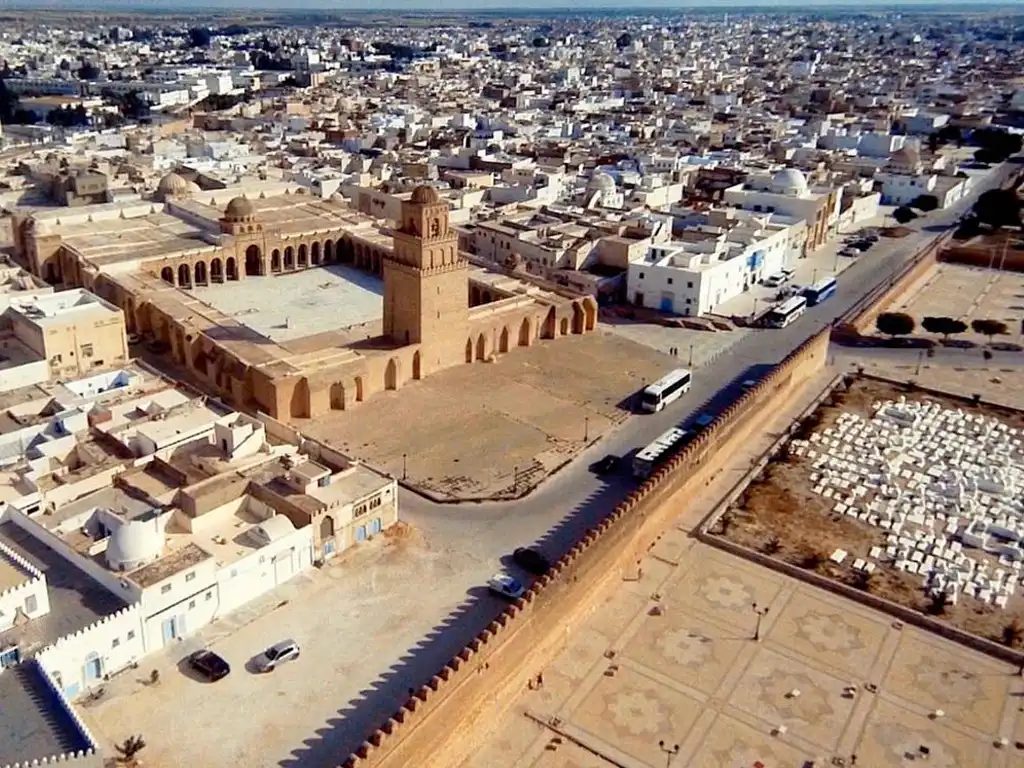
Great Mosque of Okba

Oldest mosque in the Maghreb (670, rebuilt in 836). Architectural model for all mosques in North Africa and Andalusia. Courtyard with 414 ancient reused columns, 3-level minaret the oldest still standing in the world, mihrab adorned with 9th-century Abbasid ceramics.

💡 Tip: External visit and courtyard for non-Muslims (8 DT, combined monument ticket). Very modest dress required. Avoid Friday midday.
✨ Must-see
🏘️ Quarter

UNESCO Medina

Historic fortified heart listed by UNESCO in 1988. White-washed alleyways, carpet souks, leather workshops, Sufi mausolea, traditional restaurants. Atmosphere more religious and conservative than in Tunis or Sousse.

💡 Tip: Enter via Bab Tunis. Decline unofficial guides, hire an official ONT guide (50 DT/2 hours).
✨ Must-see
🏛️ Monument

Aghlabid Basins

Monumental water reservoirs from the 9th century: 2 circular basins 130 m and 37 m in diameter, fed by a 36 km aqueduct from Cherichira. Medieval hydraulic masterpiece, UNESCO listed.

💡 Tip: Free entry. Interpretation centre nearby (5 DT). Good aerial photography possible.
✨ Must-see
🏛️ Monument

Sidi Sahbi Mausoleum (Barber's Mosque)

17th-century sanctuary dedicated to Abou Zama'a Al Balaoui, companion of the Prophet Muhammad (hence the nickname 'Barber': he is said to have preserved 3 hairs from the Prophet's beard). Arcaded courtyard, cedar ceilings, Ottoman marquetry.

💡 Tip: Free entry (donation welcome). Active pilgrimage site, respect required. Discreet photography.
🏛️ Monument

Sidi Abid Ghariani Mausoleum

14th-century madrasa and zaouia in the heart of the medina. Remarkable Hafsid architecture: finely sculpted mihrab, painted ceilings, courtyard with twisted columns.

💡 Tip: 5 DT. Often quiet, ideal for photographs.
✨ Must-see
🛒 Market / Souk

Carpet Souk (medina)

The most famous carpet market in the Maghreb. Allouchi carpets (wool, traditional motifs) and Zerbia (silk, fine). Weaving demonstrations at nearby Bir Barouta.

💡 Tip: Price of a handmade carpet: 200–2000 €. Negotiate 50–60%. Ask for ONAT certificate guaranteeing origin.
🏛️ Monument

Bir Barouta

Sacred well in a two-storey house in the medina centre. Legend has it that it is connected to the Zamzam well in Mecca. Water drawn up by a camel walking in circles.

💡 Tip: Small entrance fee (3 DT). Charming but brief visit (15 mins).
🏛️ Monument

Zaouïa Sidi Amor Abada

Mausoleum of a local 19th-century saint (the 'saint of sabres'). White domes in alignment, arcaded courtyard, giant anchors and sabres.

💡 Tip: Free. Little-known gem, 10 mins' walk from Sidi Sahbi mausoleum.

🏛️ Monuments & Historical Sites

A journey through the eras that shaped Kairouan.

Great Mosque of Okba

🛡️ UNESCO 670 (founding) / 836 (Aghlabid reconstruction)

First mosque in North Africa, founded by conqueror Oqba Ibn Nafi. Rebuilt by emir Ziadet Allah I in 836 in its current form. Architectural model for all mosques in the Maghreb and Al-Andalus. Mihrab adorned with 9th-century Iraqi ceramics, teak wood minbar (the oldest in the world, preserved in place).

Aghlabid Basins

🛡️ UNESCO 9th century (Aghlabids)

Exceptional hydraulic system: large basin 130 m in diameter, small basin 37 m and settling basin. Fed by an aqueduct from the Cherichira springs (36 km). Total capacity: 50,000 m³. Testament to medieval Islamic engineering.

Sidi Sahbi Mausoleum

🛡️ UNESCO 17th century (over 7th-century tomb)

Major sanctuary dedicated to Abou Zama'a Al Balaoui, companion of the Prophet who died in 654. His original tomb was a simple zaouia. Current mosque dating from the Mouradite period (1675), with domes, painted ceilings, marquetry. Heavily visited pilgrimage site.

Mosque of the Three Doors

🛡️ UNESCO 866

Remarkable small neighbourhood mosque notable for its exterior façade adorned with Quranic inscriptions carved in Arabic Kufic script: the oldest decorated façade of a mosque still standing in the world.

El Mouradia Madrasa

🛡️ UNESCO 1670

Quranic school founded by the Mouradite beys. Columned courtyard, prayer room, student cells. Testament to Islamic teaching under the Ottomans.

🎯 Must-Do

  • Guided tour of the UNESCO medina and 4 main monuments
  • Carpet weaving demonstration (traditional workshop)
  • Tasting makroudh (date pastry) at Masmoudi
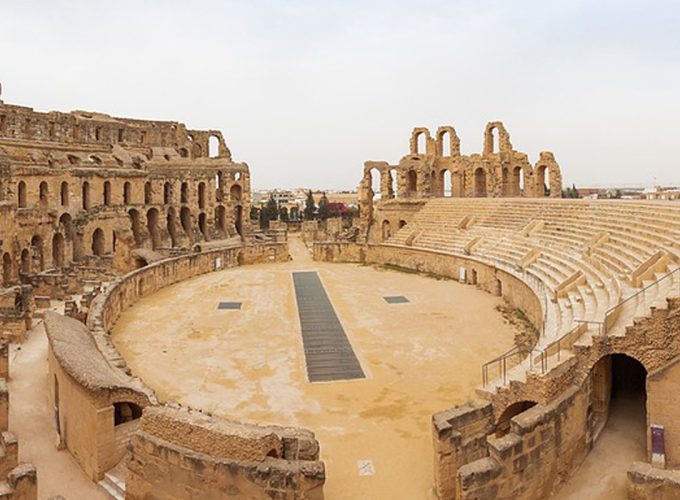
  • Excursion to El Jem (50 km, Roman amphitheatre)
  • Excursion to Roman ruins of Sbeïtla (Sufetula, 110 km)
  • 4x4 trip into the semi-desert steppe around the area
  • Traditional evening with Berber dinner and Sufi music

🍽️ Specialities to Taste

  • Makroudh — Iconic pastry with dates, semolina and honey
  • Couscous boulettes — Kairouan speciality with minced meat and coriander
  • Brik with tuna — Found everywhere in Tunisia, particularly good here
  • Pine nut tea — Served ritually in local homes
  • Rose yoghurt — Fragrant local speciality

🎪 Events and Festivals

Month of Rabi al-awwal (variable)

Mawlid (Prophet's Birthday Festival)

Anniversary of the Prophet Muhammad. Pilgrimages, processions, Sufi chanting, pastries (assida) all night long in the medina.

July–August

International Festival of Kairouan

Sacred, Sufi, Malouf and Arab-Andalusian music concerts in the courtyard of the Great Mosque and the zaouïas.

🚗 How to get there

From Djerba

Private car: 4 hours via motorway A1 then national road (330 km). SNTRI bus Djerba–Tunis with stop in Sousse, then connection Sousse–Kairouan (1 hour, 8 DT). Organised day excursion from Sousse or Hammamet more practical.

On site

Medina entirely pedestrianised. Tourist horse-drawn carriages available. Taxis to Aghlabid Pools or external mausoleums (3–5 DT).

💡 Practical advice

  • Dress code: Very modest clothing required to enter religious monuments (women: headscarf, long dress; men: trousers and long sleeves).
  • Monument pass: 12 DT for Great Mosque + Pools + Sidi Sahbi + madrasas. Available at the information office on rue Sidi Ghariani.
  • Carpets: Buy from ONAT-certified craftspeople (official label), not from medina touts.
  • Friday: Great Mosque closed to non-Muslims between 11am and 2pm.
  • Water: Bottle essential in summer (desert climate, 35–40 °C).
  • Accommodation: 1 night is enough. Prefer La Kasbah (4*) for its setting in the medina.

Frequently asked questions

Is one day enough in Kairouan?

Yes for the essentials: Great Mosque, medina, Aghlabid Pools, Sidi Sahbi (4-5 hours). To soak up the atmosphere, taste makroudh at Masmoudi and buy a carpet, plan one night on site.

Can you enter the Great Mosque?

Non-Muslims can visit the courtyard, the minaret externally and view the prayer hall interior from the threshold (entry forbidden). Very modest dress required. Closed Friday 11am-2pm. 8 DT.

Must women wear a veil?

Yes in Kairouan, Tunisia's most religious city. Headscarf covering hair and neck, long dress or trousers, long sleeves. Available to hire for 5 DT at the entrance to the Great Mosque.

Is there a security risk?

None, the city is very safe. Respectful and calm atmosphere. A few touts for carpets in the medina, ignore firmly and ask a shopkeeper for directions.

Which carpet to buy and at what price?

Allouchi carpet (wool, Berber patterns): 200–800 € per m². Silk Zerbia: 600–2500 €. Buy with ONAT label and certificate of origin. Haggle 50–60% of the first offer. Beware of 'Chinese carpets' claiming to be Tunisian.

Travel to Kairouan tailor-made

Our local team designs your ideal Kairouan programme. Private car or group place, cheapest on the market.